

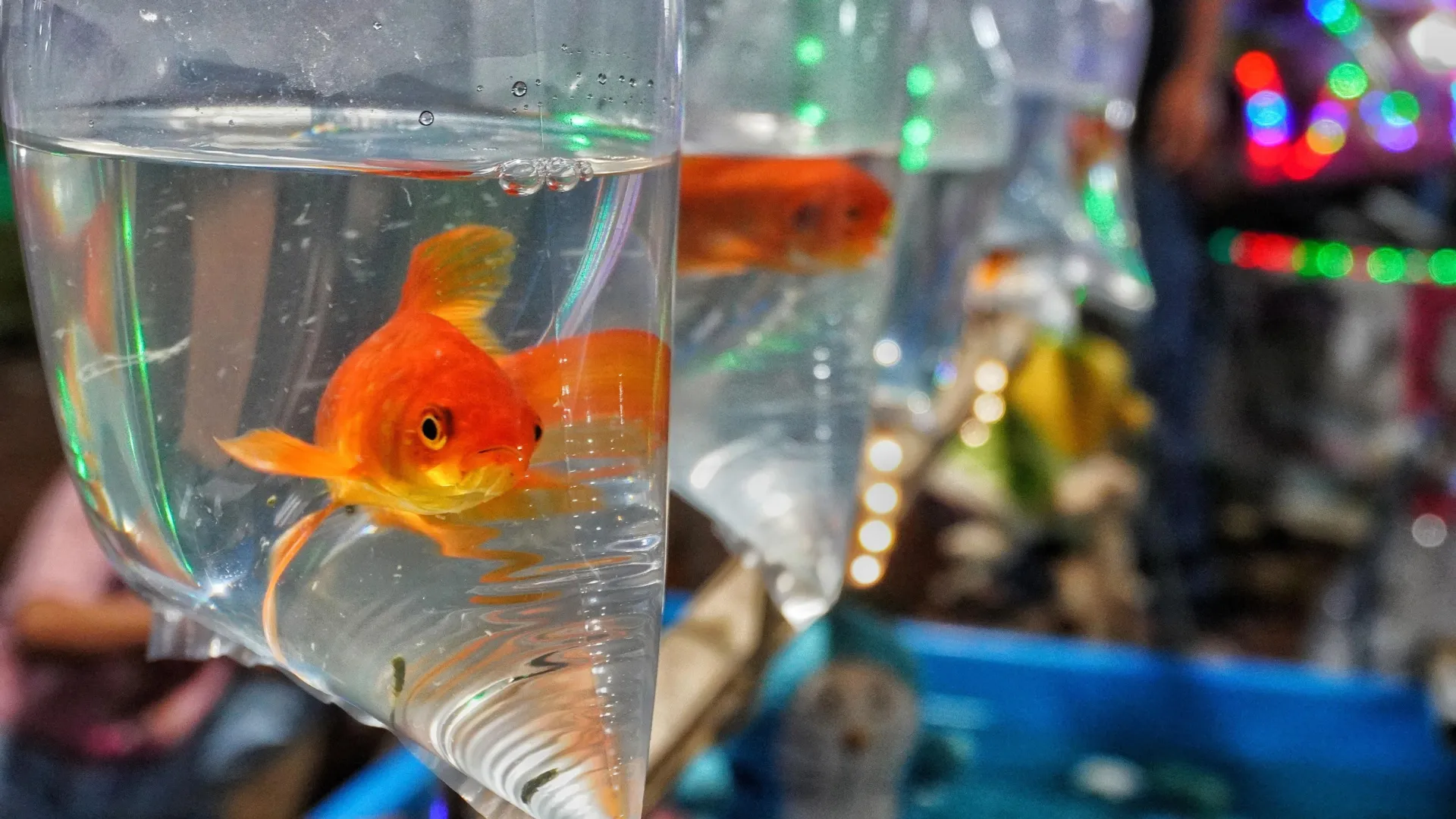
A new peer reviewed study from researchers at The University of Toledo and the University of Missouri has found that goldfish can have major impacts on freshwater ecosystems when they are released or escape into the wild.
Published in the Journal of Animal Ecology, the research provides some of the strongest experimental evidence to date that invasive goldfish can dramatically alter lake environments. The findings carry an important warning for pet owners, natural resource managers, and policymakers: while goldfish are common household pets, they can become a significant ecological threat outside the aquarium.
“It is critically important to inform the public that their pets can become pests that will harm freshwater ecosystems. The evidence is now clear — releasing a goldfish into the wild might be seen as an act of kindness, but it can turn into a major ecological threat,” said the study’s lead investigator, Dr. William Hintz, associate professor in UToledo’s Department of Environmental Sciences and Lake Erie Center.
Goldfish Trigger Major Changes in Lake Ecosystems
The study, titled “Invasive goldfish trigger a regime shift in experimental lake ecosystems of varying trophic state,” used large outdoor freshwater mesocosms designed to mimic real world lake conditions. Researchers introduced goldfish (Carassius auratus) into experimental ecosystems and monitored how they affected different types of lakes over time.
The team examined two common freshwater conditions: nutrient poor (oligotrophic) waters and nutrient rich (eutrophic) waters. In both environments, goldfish caused substantial ecological disruption.
Among the most significant findings:
- Water quality deteriorated quickly. In nutrient rich systems, goldfish caused water clarity to decline rapidly while suspended particles increased sharply, indicating a major change in ecosystem conditions.
- Native aquatic species declined. Populations of snails, amphipods, and zooplankton were significantly reduced. These small organisms play a vital role in healthy freshwater food webs and were affected through both predation and habitat disturbance.
- Native fish were negatively affected. Goldfish competed with native fish for food and other resources, reducing the overall body condition of native fish species. Scientists view this as an important indicator of long term population health.
- Both lake types were vulnerable. Although the specific effects varied between nutrient poor and nutrient rich systems, goldfish caused harm in both. The results suggest that no freshwater ecosystem is completely protected from their impacts.
Evidence Points Directly to Goldfish
Researchers used both additive and substitutive experimental designs to separate the effects of goldfish from the effects associated with having more fish overall.
Their analysis showed that while some changes in aquatic vegetation were linked to total fish abundance, the most severe ecological damage was directly connected to the presence of goldfish.
The study also documented what scientists call a “regime shift” — the point at which an ecosystem crosses a threshold and rapidly reorganizes into a fundamentally different and often degraded condition. Once these shifts occur, restoring an ecosystem can be extremely difficult and expensive.
Why Released Goldfish Become a Problem
Goldfish are among the most widely distributed ornamental fish in the world, and the global pet trade continues to move aquatic species across continents at unprecedented levels.
When goldfish are released into ponds, rivers, or lakes, or escape during flooding events, they can establish invasive populations and spread quickly.
“If goldfish are released into the wild, they rapidly grow into very large fish that stir up lake sediments, consume large numbers of prey and compete with native fish,” said Rick Reylea, professor in the University of Missouri College of Agriculture, Food and Natural Resources, director of Mizzou’s Johnny Morris Institute of Fisheries, Wetlands and Aquatic Systems and co-author of the study.
Calls for Prevention and Public Awareness
The researchers say goldfish should be treated as a high priority invasive species. They recommend that natural resource agencies focus on prevention, early detection, and control efforts before wild populations become established.
The authors also stress the need for stronger public education efforts so pet owners understand the environmental consequences of releasing aquarium animals into natural waterways.
People who no longer want their goldfish are encouraged to pursue alternatives such as returning the fish to a pet store, finding another aquarium owner willing to adopt it, or contacting local wildlife authorities for guidance.
About the Study
The study, “Invasive goldfish trigger a regime shift in experimental lake ecosystems of varying trophic state,” was authored by Dr. William Hintz of The University of Toledo, Hannah Barrett, and Dr. Rick Relyea of the University of Missouri.
Researchers conducted the work using outdoor freshwater mesocosms designed to replicate realistic lake conditions. The study combined additive and substitutive experimental approaches across oligotrophic (nutrient-poor) and eutrophic (nutrient-rich) trophic states to evaluate the effects of goldfish (Carassius auratus) on water quality, phytoplankton, invertebrate communities, filamentous algae, and native fish condition.
