
LIVE NEWS
  • Claude Fable 5 Doesn’t Change the Mythos Security Story
  • Kennedy Center removes Trump’s name from building : NPR
  • The Army wants to build a better data center. Can they do it?
  • Memory chip shortage: How crazy could it get?
  • Push for new Cyber Force service branch narrowly fails in the Senate
  • The relationship recession is even bigger for Gen Z than we thought
  • Trump's name removed from Kennedy Center after court order
  • BTC’s Recovery May Be a Trap as $51K Risk Lingers
Prime Reports
  • Home
  • Popular Now
  • Crypto
  • Cybersecurity
  • Economy
  • Geopolitics
  • Global Markets
  • Politics
  • See More
    • Artificial Intelligence
    • Climate Risks
    • Defense
    • Healthcare Innovation
    • Science
    • Technology
    • World
Prime Reports
  • Home
  • Popular Now
  • Crypto
  • Cybersecurity
  • Economy
  • Geopolitics
  • Global Markets
  • Politics
  • Artificial Intelligence
  • Climate Risks
  • Defense
  • Healthcare Innovation
  • Science
  • Technology
  • World
Home»Science»Geminid meteor shower: where to watch Australia’s biggest shooting star show this weekend | Meteors
Science

Geminid meteor shower: where to watch Australia’s biggest shooting star show this weekend | Meteors

primereportsBy primereportsDecember 11, 2025No Comments3 Mins Read
Share Facebook Twitter Pinterest LinkedIn Tumblr Reddit Telegram Email
Geminid meteor shower: where to watch Australia’s biggest shooting star show this weekend | Meteors
Share
Facebook Twitter LinkedIn Pinterest Email


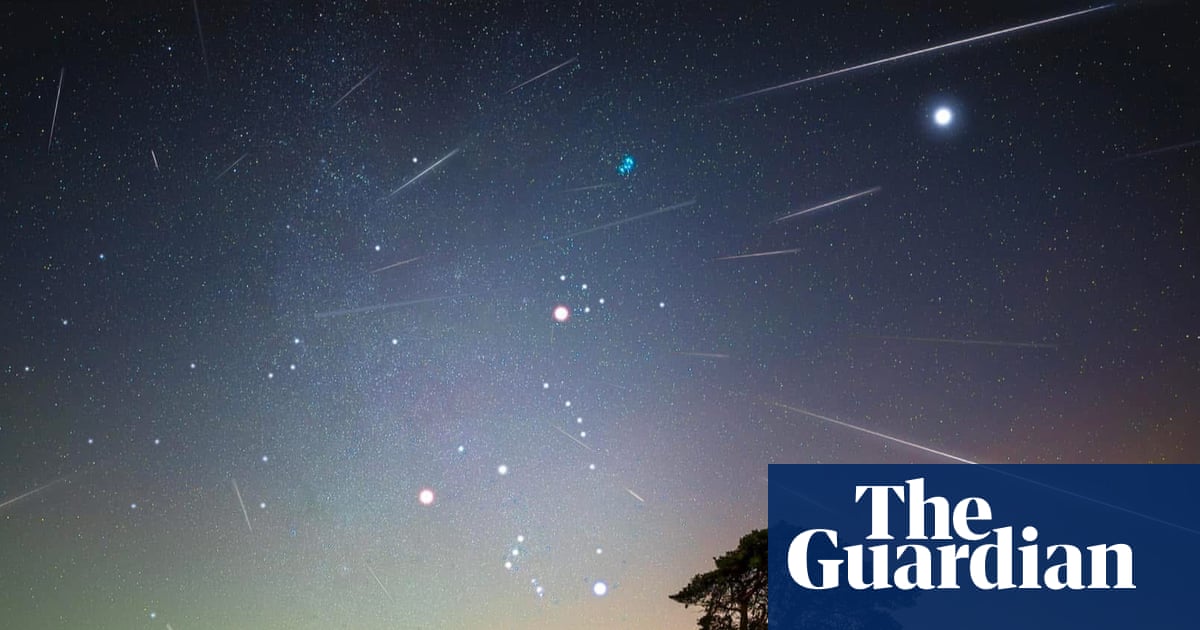
They’re bright, they’re plentiful and the Geminids – which make up what’s regarded as one of the best annual meteor showers to witness – are about to reach their peak viewing time.

The Geminid meteors have already been active in our skies since 4 December, building up to the best night of the year to see them on Sunday.

Here’s what you need to know about the meteor shower and where you can best see it.


What is the Geminid meteor shower?

The Geminids get their name from the Gemini constellation, which they appear to neighbour. According to Prof Jonti Horner, an astrophysicist at the University of Southern Queensland, the Geminids are the best annual meteor shower by far, with people able to see potentially dozens of meteors an hour.

“What’s going on with the Geminids is that you’ve got a train of debris left behind by an astroid … often described as a rock comet,” Horner says.

Sign up: AU Breaking News email

He says the comet – asteroid 3200 Phaethon – is named after the hero of Greek mythology, who was the son of sun god Helios. It gained this name due to its orbit, which takes it very close to the sun.

And, unlike many other meteors created from comets’ tails, the Geminids are actually made from the dust from asteroid 3200 Phaethon.


When can you best see the Geminids in Australia?

The meteor shower will peak on Sunday night and Monday morning.

Horner says they will appear highest in the sky between 3am and 3.30am (AEDT) on the east coast.

“The further north you are in Australia the better view you’d have,” Horner says.

“So if you were in Darwin or Cairns and you’ve got really good dark skies, you could see as many as 80 or 90 meteors per hour at around 2am or 3am.”


What’s a good way to get a view of the meteor shower?

Horner says that the best way to watch the Geminid meteor shower will be by moving away from street lights.

“I would always rather always stay up late than get up early, so for me I will stay up until I get too tired,” Horner says.


What causes a meteor shower to occur in the first place?

Horner says that as the Earth orbits the sun, it returns to peak viewing angles for the Geminids each year.

“So it’s like driving around a really big roundabout, if you’re just doing laps of the roundabout then you keep coming back to the same place,” Horner says.

“Now crossing Earth’s orbit are all these streams of dust and debris.”

He says that when comets go around the sun, they shed dust. This then spreads out over time, creating a broad stream of dust orbiting the sun.

Once the Earth passes through this stream, it runs into more dust than it normally would, and this is what causes the meteor showers to appear in our skies.


What can star enthusiasts look forward to in the new year?

The next big event for stargazers to enjoy in 2026 will be a total lunar eclipse on 3 March.

Share. Facebook Twitter Pinterest LinkedIn Tumblr Email
Previous ArticleThis cool delivery robot is coming soon to a U.S. city
Next Article Blood tests reveal obesity rapidly accelerates Alzheimer’s progression
primereports
  • Website

Related Posts

Science

The relationship recession is even bigger for Gen Z than we thought

June 13, 2026
Science

‘This might be the point of no return’: Experts on the current measles outbreak and where we go from here

June 13, 2026
Science

A popular sunscreen ingredient can finally be sold in the United States

June 12, 2026
Add A Comment
Leave A Reply Cancel Reply

Top Posts

Paxton’s win over Cornyn sets up high-stakes Texas clash with Talarico

May 28, 202616 Views

Global Resources Outlook 2024 | UNEP

December 6, 202510 Views

Texas Democrat Talarico claims voting laws are rigged ahead of Paxton race

May 28, 20269 Views
Stay In Touch
  • Facebook
  • YouTube
  • TikTok
  • WhatsApp
  • Twitter
  • Instagram
Latest Reviews

Subscribe to Updates

Get the latest tech news from FooBar about tech, design and biz.

PrimeReports.org
Independent global news, analysis & insights.

PrimeReports.org brings you in-depth coverage of geopolitics, markets, technology and risk – with context that helps you understand what really matters.

Editorially independent · Opinions are those of the authors and not investment advice.
Facebook X (Twitter) LinkedIn YouTube
Key Sections
  • World
  • Geopolitics
  • Popular Now
  • Artificial Intelligence
  • Cybersecurity
  • Crypto
All Categories
  • Artificial Intelligence
  • Climate Risks
  • Crypto
  • Cybersecurity
  • Defense
  • Economy
  • Geopolitics
  • Global Markets
  • Healthcare Innovation
  • Politics
  • Popular Now
  • Science
  • Technology
  • World
  • About Us
  • Contact Us
  • Privacy Policy
  • Terms & Conditions
  • Disclaimer
  • Cookie Policy
  • DMCA / Copyright Notice
  • Editorial Policy

Sign up for Prime Reports Briefing – essential stories and analysis in your inbox.

By subscribing you agree to our Privacy Policy. You can opt out anytime.
Latest Stories
  • Claude Fable 5 Doesn’t Change the Mythos Security Story
  • Kennedy Center removes Trump’s name from building : NPR
  • The Army wants to build a better data center. Can they do it?
© 2026 PrimeReports.org. All rights reserved.
Privacy Terms Contact

Type above and press Enter to search. Press Esc to cancel.