

LIVE NEWS
  • Apple Will Reportedly Add Bill-Splitting Feature to iOS 27
  • Opinion | Putin Has No Good Way Out of His War
  • Flowise’s MCP implementation can run ghost commands
  • DOE Restarts Home Efficiency Rebates, and Electrification Is the Biggest Loser
  • Albania prosecutors probe Jared Kushner-linked resort amid violent protests
  • Clinical Workflow Automation: Where AI Is Making Real Inroads
  • AMD Radeon RX 9070 GRE review: A cheaper GPU for a wildly expensive era
  • US court upholds injunction against Trump policy banning transgender troops | Donald Trump News
Prime Reports
  • Home
  • Popular Now
  • Crypto
  • Cybersecurity
  • Economy
  • Geopolitics
  • Global Markets
  • Politics
  • See More
    • Artificial Intelligence
    • Climate Risks
    • Defense
    • Healthcare Innovation
    • Science
    • Technology
    • World
Prime Reports
  • Home
  • Popular Now
  • Crypto
  • Cybersecurity
  • Economy
  • Geopolitics
  • Global Markets
  • Politics
  • Artificial Intelligence
  • Climate Risks
  • Defense
  • Healthcare Innovation
  • Science
  • Technology
  • World
Home»Cybersecurity»Google Chrome adds session cookie theft protection for all users
Cybersecurity

Google Chrome adds session cookie theft protection for all users

primereportsBy primereportsMay 30, 2026No Comments3 Mins Read
Share Facebook Twitter Pinterest LinkedIn Tumblr Reddit Telegram Email
Google Chrome adds session cookie theft protection for all users
Share
Facebook Twitter LinkedIn Pinterest Email


Google Chrome adds session cookie theft protection for all users

Google says the Chrome Device Bound Session Credentials (DBSC) security feature is now generally available and is rolling out to all users to prevent account takeovers.

Available in beta since April, DBSC was first announced in 2024 as a way to cryptographically bind session cookies to a specific device, preventing hackers from using such stolen cookies to bypass multi-factor authentication (MFA) and hijack users’ accounts.

DBSC works by cryptographically linking user sessions to the hardware, such as their computer’s security chip (e.g., the Trusted Platform Module (TPM) on Windows and the Secure Enclave on macOS).

Since the unique public/private keys used to encrypt and decrypt sensitive data are generated by the security chip, they cannot be stolen, preventing attackers from using stolen session cookies.

“DBSC fundamentally changes the web’s capability to defend against this threat by shifting the paradigm from reactive detection to proactive prevention, ensuring that successfully exfiltrated cookies cannot be used to access users’ accounts,” Google said in April.

“DBSC strengthens account security after users are logged in and helps bind a session cookie — small files used by websites to remember user information — to the device a user authenticated from. Even if malware was present on the user’s device, DBSC reduces the risk of session theft and makes it meaningfully more difficult for malicious actors to exploit stolen session cookies,” it added this week.
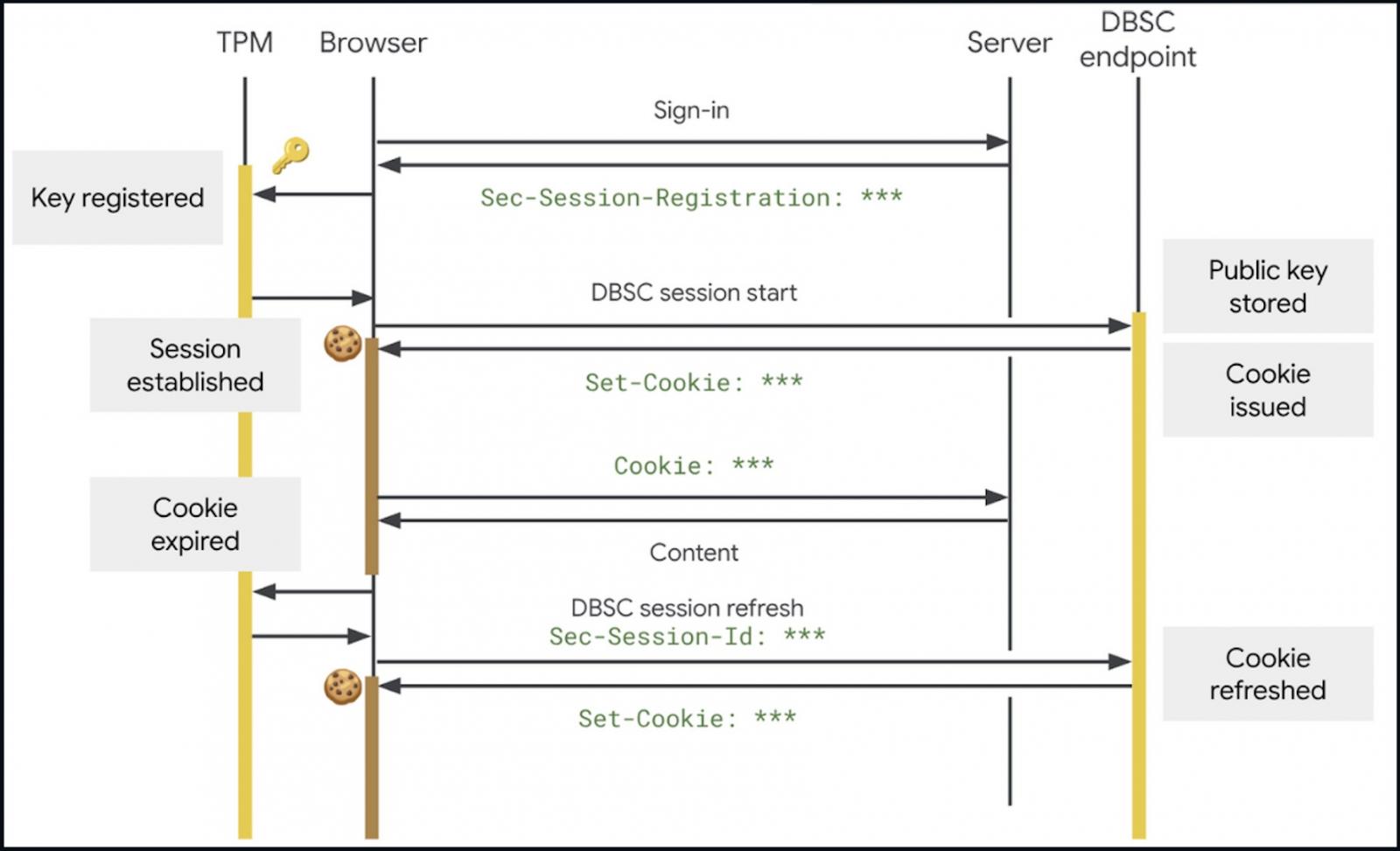
How DBSC works
How DBSC works (Google)

​The feature is now rolling out to all Google Workspace customers, Workspace Individual subscribers, and users with personal Google accounts.

Google added that it will be enabled by default for all Google Workspace customers upon rollout and that administrators cannot disable it.

In the past, threat actors have abused the undocumented Google OAuth “MultiLogin” API endpoint to generate new authentication cookies after stolen ones expired.

The Lumma and Rhadamanthys information-stealing malware operations have also claimed that they could restore expired Google authentication cookies stolen in attacks to gain access to infected users’ Google accounts.

At the time, Google advised customers to remove malware from their devices and recommended enabling Chrome’s Enhanced Safe Browsing security mode to defend against phishing and malware attacks.

However, the new Chrome Device Bound Session Credentials (DBSC) security feature should effectively block malicious actors from abusing such stolen cookies, as they will not have access to the cryptographic keys required to use them.


article image

Automated pentesting tools deliver real value, but they were built to answer one question: can an attacker move through the network? They were not built to test whether your controls block threats, your detection rules fire, or your cloud configs hold.

This guide covers the 6 surfaces you actually need to validate.

Download Now

Share. Facebook Twitter Pinterest LinkedIn Tumblr Email
Previous ArticleAs My Kids Get Older, I’m Learning to Make the Time We Have Count
Next Article Florida Candidate Liquidates $800K in Bitcoin to Bankroll Congressional Bid
primereports
  • Website

Related Posts

Cybersecurity

Miasma Supply Chain Attack Compromises Red Hat npm Packages with Credential-Stealing Worm

June 1, 2026
Cybersecurity

Alleged Kimwolf Botmaster ‘Dort’ Arrested, Charged in U.S. and Canada – Krebs on Security

June 1, 2026
Cybersecurity

As the Pentagon Pushes for Battlefield AI, Some Military Leaders Urge Caution

June 1, 2026
Add A Comment
Leave A Reply Cancel Reply

Top Posts

Paxton’s win over Cornyn sets up high-stakes Texas clash with Talarico

May 28, 202616 Views

Global Resources Outlook 2024 | UNEP

December 6, 202510 Views

Texas Democrat Talarico claims voting laws are rigged ahead of Paxton race

May 28, 20269 Views
Stay In Touch
  • Facebook
  • YouTube
  • TikTok
  • WhatsApp
  • Twitter
  • Instagram
Latest Reviews

Subscribe to Updates

Get the latest tech news from FooBar about tech, design and biz.

PrimeReports.org
Independent global news, analysis & insights.

PrimeReports.org brings you in-depth coverage of geopolitics, markets, technology and risk – with context that helps you understand what really matters.

Editorially independent · Opinions are those of the authors and not investment advice.
Facebook X (Twitter) LinkedIn YouTube
Key Sections
  • World
  • Geopolitics
  • Popular Now
  • Artificial Intelligence
  • Cybersecurity
  • Crypto
All Categories
  • Artificial Intelligence
  • Climate Risks
  • Crypto
  • Cybersecurity
  • Defense
  • Economy
  • Geopolitics
  • Global Markets
  • Healthcare Innovation
  • Politics
  • Popular Now
  • Science
  • Technology
  • World
  • About Us
  • Contact Us
  • Privacy Policy
  • Terms & Conditions
  • Disclaimer
  • Cookie Policy
  • DMCA / Copyright Notice
  • Editorial Policy

Sign up for Prime Reports Briefing – essential stories and analysis in your inbox.

By subscribing you agree to our Privacy Policy. You can opt out anytime.
Latest Stories
  • Apple Will Reportedly Add Bill-Splitting Feature to iOS 27
  • Opinion | Putin Has No Good Way Out of His War
  • Flowise’s MCP implementation can run ghost commands
© 2026 PrimeReports.org. All rights reserved.
Privacy Terms Contact

Type above and press Enter to search. Press Esc to cancel.