

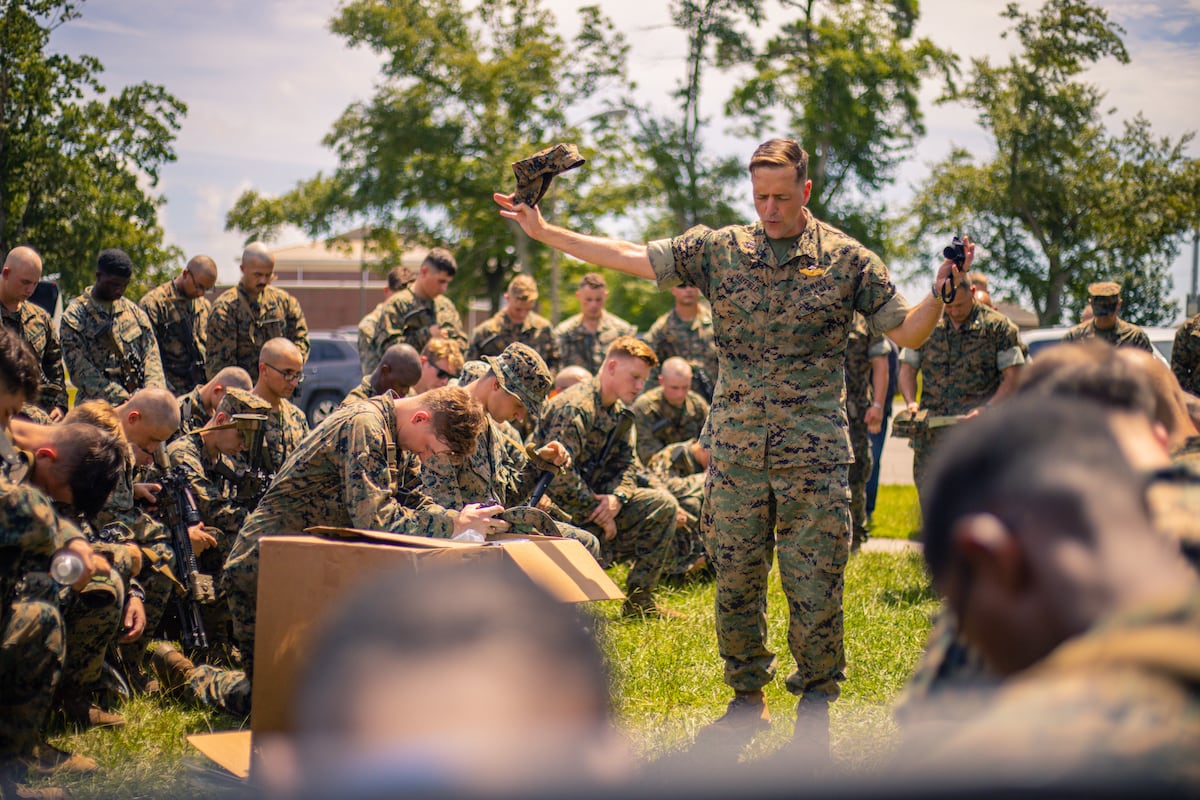
As a Navy line officer, I learned quickly that you cannot accomplish the mission without staff corps officers. Doctors, lawyers, civil engineers and chaplains are commissioned professionals whose expertise is woven into the command structure itself.
The Chaplain Corps, the Navy’s oldest staff corps, is part of that tradition. That is why Secretary Pete Hegseth’s recent directive is deeply concerning.
The defense secretary directed military chaplains to keep their rank but no longer display it on their uniforms. Instead, they will wear only religious insignia.
He describes the change as a way to show that a chaplain is “first and foremost a chaplain, and an officer second.” That is not a narrow administrative change; it announces a dangerous principle.
The real question is: What comes next if the Pentagon decides some commissioned officers should be treated as less than others?
If chaplains are to be presented as clergy first and officers second, what prevents future political appointees from applying the same logic to other staff corps?
Military physicians are doctors first in their training and vocation. Judge advocates are lawyers first in their professional formation. Nurses, dentists and medical service officers all enter the force with distinct professional identities joined to a military commission.
Those identities are intentionally integrated. Staff corps professionals are effective precisely because they are also officers, entrusted with authority and accountability inside a military system.
That is why rank matters.
Rank is not decoration. It signals responsibility, authority and accountability. Over time, staff corps officers do not cease to be professionals; they become senior advisors whose expertise carries greater institutional weight because it is joined to a commission in the armed forces and to the duties that commission carries.
That commission is not merely administrative; it reflects a sworn obligation under the Constitution and within the chain of command. Hiding rank while insisting it still exists symbolically diminishes that commission.
This is especially misguided in the chaplaincy.
The chaplain corps has always embodied a deliberate dual role. A chaplain is both a religious leader and a commissioned officer. That tension is not a design flaw. It is the design.
I saw this firsthand as a junior officer. In disciplinary proceedings, the chaplain could offer insight about a service member that the chain of command might not know, but ought to consider.
That counsel carried weight, not only because they were a religious leader, but because they were a commissioned officer who understood discipline, morale and good order. Their role was made possible, not weakened, by that commission.
I also saw chaplains serve across lines of rank, belief and circumstance. As a Protestant, I sometimes sought counsel from Roman Catholic and Jewish chaplains. That was evidence of what military chaplaincy is meant to be: a trusted institution inside a pluralistic force.
Reducing chaplains to religious identity alone does not clarify their mission; it distorts it by implying that military rank contaminates ministry rather than enabling it.
Hegseth argues that removing rank insignia will make junior personnel more comfortable approaching chaplains with sensitive issues. But service members already approach senior physicians for medical care, JAG officers for legal advice and chaplains for confidential counseling because of professional trust, not insignia.
If troops are reluctant to seek help, the answer is not symbolic rank erasure but a command climate that reinforces trust in professional confidentiality.
More troubling is the precedent. Once civilian leadership redefines one staff corps by stripping visible rank, the door opens to doing the same elsewhere.
Today, the claim is that chaplains should look less like officers. Tomorrow, perhaps military lawyers are told they should look less like officers because they are guardians of justice, or doctors because they are healers first. The specific rationale will change. The institutional damage will not.
The Navy places chaplains alongside JAG, Medical Corps, Nurse Corps, Dental Corps, Supply Corps and other staff corps communities. That reflects a longstanding truth: The U.S. military depends on highly trained professional officers whose expertise must remain fully integrated into the officer corps, not symbolically detached from it.
A military serious about professionalism does not create two classes of officers, one of them told that its rank exists but should no longer be visible. Regardless of how they receive their commission, they are still officers in the military.
If this directive stands, chaplains will be the first proof of concept. The larger danger is not to this one group alone. It is to the principle that professional expertise and a military commission belong together.
The Pentagon should reverse course, withdraw the directive and reaffirm that chaplains, like all staff corps officers, serve both as professionals and as commissioned officers.
Dave Petri is a retired Navy Commander and currently the communications director for National Security Leaders for America.
