

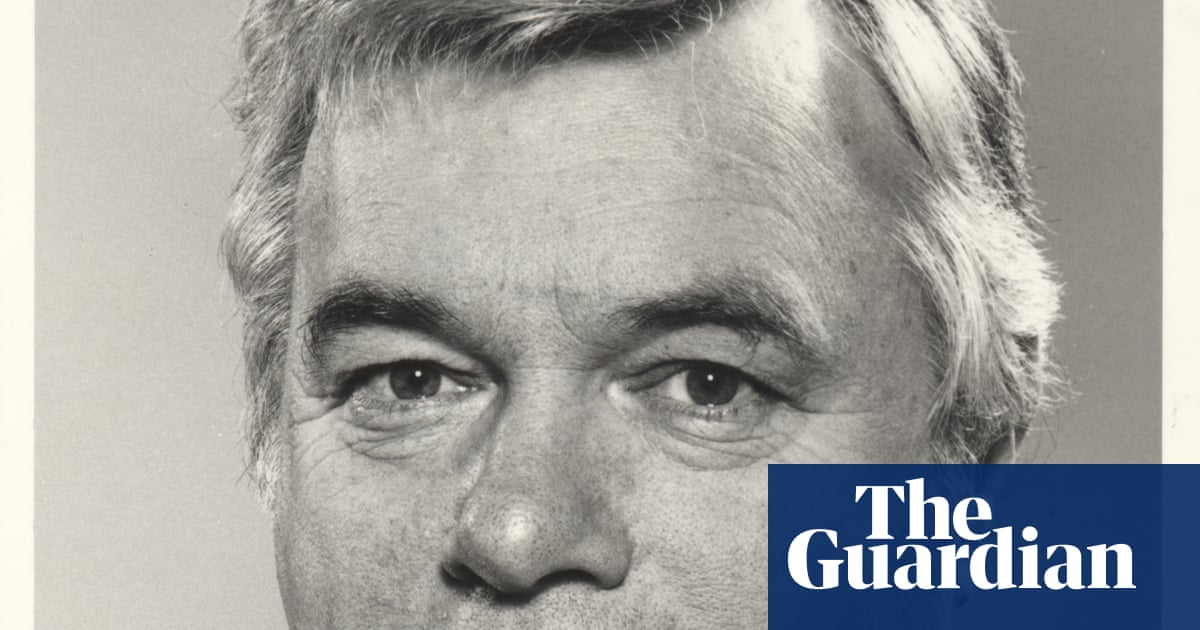
My father, Robert Smith, who has died aged 92, was a pharmacologist and professor at St Mary’s medical school in London (now part of Imperial College) whose work helped shape thinking on people’s differing responses to drugs – genetically, biochemically and clinically.
Bob became well known in particular for his role in the discovery of “debrisoquine polymorphism”. An enthusiastic participant when it came to self-experimentation at St Mary’s, in 1975 he was one of five volunteer researchers who took debrisoquine, a drug developed to manage blood pressure. Bob was the only volunteer to suffer adverse effects (hypotension) and collapsed.
This led to the discovery of the existence of a genetic polymorphism – where a genetic variation in individuals makes them unable to break down certain drugs efficiently. While Bob himself described the discovery as an “accident waiting to happen”, it put him in the vanguard of a developing field that studied how genes affect a person’s response to drugs. In 1998 he was the first recipient of the Paton prize for his work in this field.
Born in Cheshunt, Hertfordshire, Bob was the fifth child of John Smith, a decorator, and Vera (nee Stracey). He was fascinated by science from his earliest years at St Joseph’s primary school and then Cheshunt grammar school. After leaving school, he worked as a lab technician before gaining a pharmacy degree at the Chelsea School of Pharmacy (now part of King’s College London) in 1956.
Having decided to concentrate on the chemical fate of drugs in biological systems, he moved to St Mary’s medical school for his PhD, awarded in 1960. He then spent a period as a visiting research fellow at the US National Institutes of Health, a leading centre for radically new approaches to pharmacology and toxicology.
Bob returned to St Mary’s in 1962 as a lecturer in biochemistry, and stayed there for the rest of his career, becoming professor of pharmacology in 1978, as well as deputy dean of the medical school (1980-88).
In addition to his work on human medicines, Bob also made use of these principles in the regulation around dope-testing of horses in racing and equestrianism. He chaired the UK Horserace Scientific Advisory Committee (1979-99), its pan-European equivalent (1992-2005), and served as a director of the Horseracing Forensic Laboratory in Newmarket during the 1990s.
Bob never properly retired. From 1996, he was made emeritus professor of pharmacology and senior research fellow at the Imperial College School of Medicine, publishing his last research paper in 2020.
His legacy is not limited to the distinctive contributions he made to science but also the impact he made through his principles, warmth, kindness and generosity.
Bob’s first marriage, to Judith Fishwick, ended in divorce. He married Mary O’Malley in 1979, and they settled in North Finchley, London. Mary survives him, as do their two children, Catherine and me, the three children of his first marriage, Jerri, Matthew and Daniel, and seven grandchildren.
