
LIVE NEWS
  • Scientists thought Jupiter’s moon Europa was ejecting water. Now they’re not so sure
  • What to know about the death of Congolese man in Ireland
  • Why Most Crypto Users Are Actually Speculating on Attention
  • Thinking about plug-in solar? It may be coming to your state soon
  • The other China shock
  • Trump, Inequality Threaten Global Health Efforts
  • Standard Chartered boss apologises for ‘lower-value human capital’ comments amid job cuts | Standard Chartered
  • In shift, Trump announces deployment of 5,000 US troops to Poland
Prime Reports
  • Home
  • Popular Now
  • Crypto
  • Cybersecurity
  • Economy
  • Geopolitics
  • Global Markets
  • Politics
  • See More
    • Artificial Intelligence
    • Climate Risks
    • Defense
    • Healthcare Innovation
    • Science
    • Technology
    • World
Prime Reports
  • Home
  • Popular Now
  • Crypto
  • Cybersecurity
  • Economy
  • Geopolitics
  • Global Markets
  • Politics
  • Artificial Intelligence
  • Climate Risks
  • Defense
  • Healthcare Innovation
  • Science
  • Technology
  • World
Home»Science»Scientists thought Jupiter’s moon Europa was ejecting water. Now they’re not so sure
Science

Scientists thought Jupiter’s moon Europa was ejecting water. Now they’re not so sure

primereportsBy primereportsMay 22, 2026No Comments3 Mins Read
Share Facebook Twitter Pinterest LinkedIn Tumblr Reddit Telegram Email
Scientists thought Jupiter’s moon Europa was ejecting water. Now they’re not so sure
Share
Facebook Twitter LinkedIn Pinterest Email


Astronomers have studied 14 years of Hubble Space Telescope observations of Jupiter’s icy moon Europa, and now suspect that its infamous water vapor eruptions may not exist as was previously thought

Europa has long been a hot target for scientists aiming to investigate the habitability of nearby worlds and the possible existence of life elsewhere in the solar system. That is because this Jovian moon is thought to host a global subsurface ocean that possibly harbors some of the essential elements for life under its thick and icy shell, including complex organic chemicals and water.

The faint and difficult-to-detect plumes were previously thought to originate from the vast global saltwater ocean lurking beneath the icy shell of Europa. This material is thought to erupt from cracks in the icy shell of the moon. Now, previous evidence of the existence of these plumes has been called into question by the very scientists who initially proposed them.


You may like

“The evidence for water vapor plumes on Europa isn’t as strong as we first understood it,” team member Kurt Retherford of the Southwest Research Institute (SwRI) said in a statement. Retherford was part of a team that in 2014 suggested the existence of these European water plumes, but he and his colleagues now reconsider this conclusion.

Another look at Europa

To reconsider the existence of Europa’s water plume eruptions, Retherford and colleagues looked at 14 years of data regarding Europa collected by Hubble using its HST/STIS instrument (Hubble Space Telescope’s Space Telescope Imaging Spectrograph). In particular, they honed in on a specific wavelength of ultraviolet light called Lyman-alpha emissions, which is emitted and scattered by hydrogen atoms.

Retherford and team had been detecting Lyman-alpha emissions from Europa between 2012 and 2014, but this investigation was pushing Hubble to its very limits.

“One of the difficulties in interpreting the data back then was determining where to place Europa within its context,” Retherford explained. “The way Hubble works left some uncertainty in terms of placement relative to the center of the image. If Europa’s placement was off even just by a pixel or two, it could affect how the data gets interpreted.”

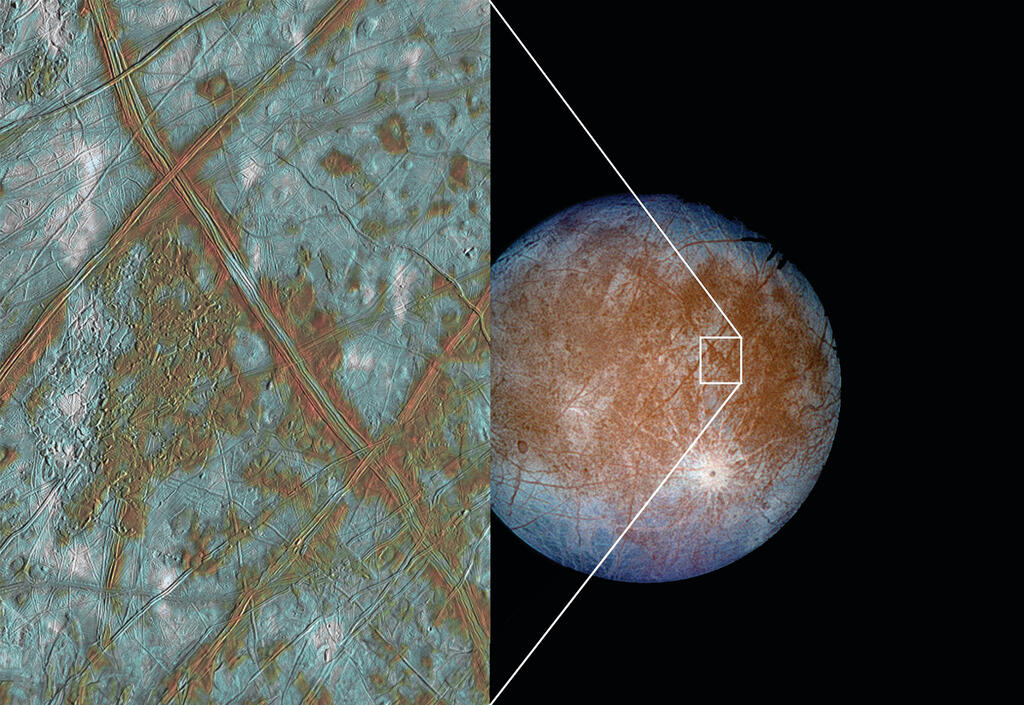
The existence of water vapor plumes on Jupiter’s moon Europa initially reported based in Hubble observations from 2012 are now in doubt

The existence of water vapor plumes on Jupiter’s moon Europa initially reported based in Hubble observations from 2012 are now in doubt (Image credit: NASA)

The team feared that the detection of water vapor plumes from Europa may have been the result of “noise” in their data.

“Our reanalysis took our original 99.9% confidence in the plumes’ existence and reduced it to less than 90% confidence,” team leader Lorenz Roth of the KTH Royal Institute of Technology, Sweden, said. “That’s simply not enough evidence to support the certainty of claims we made at the time.”

Space

The team still can’t confidently rule out the existence of Europa’s water vapor, especially as similar plumes have been more confidently detected on Saturn’s icy moon of Enceladus, and sulfur dioxide eruptions have been detected from Europa’s fellow Jovian moon of Io, the most volcanic body in the entire solar system.

The question of the existence of these water plumes and the salty global ocean of Europa may finally be settled in 2030 when NASA’s Europa Clipper mission arrives in the Jovian system.

The team’s research was published on May 5 in the journal Astronomy & Astrophysics.

Share. Facebook Twitter Pinterest LinkedIn Tumblr Email
Previous ArticleWhat to know about the death of Congolese man in Ireland
primereports
  • Website

Related Posts

Science

US curbs on travelers exposed to deadly viruses may infringe rights and deter volunteers | US news

May 21, 2026
Science

How do hurricanes and typhoons form and is climate change making them stronger?

May 21, 2026
Science

Women’s body temperature rises from age 18 to 42 but we don’t know why

May 21, 2026
Add A Comment
Leave A Reply Cancel Reply

Top Posts

Global Resources Outlook 2024 | UNEP

December 6, 20258 Views

The D Brief: DHS shutdown likely; US troops leave al-Tanf; CNO’s plea to industry; Crowded robot-boat market; And a bit more.

February 14, 20265 Views

German Chancellor Merz faces difficult mission to Israel – DW – 12/06/2025

December 6, 20254 Views
Stay In Touch
  • Facebook
  • YouTube
  • TikTok
  • WhatsApp
  • Twitter
  • Instagram
Latest Reviews

Subscribe to Updates

Get the latest tech news from FooBar about tech, design and biz.

PrimeReports.org
Independent global news, analysis & insights.

PrimeReports.org brings you in-depth coverage of geopolitics, markets, technology and risk – with context that helps you understand what really matters.

Editorially independent · Opinions are those of the authors and not investment advice.
Facebook X (Twitter) LinkedIn YouTube
Key Sections
  • World
  • Geopolitics
  • Popular Now
  • Artificial Intelligence
  • Cybersecurity
  • Crypto
All Categories
  • Artificial Intelligence
  • Climate Risks
  • Crypto
  • Cybersecurity
  • Defense
  • Economy
  • Geopolitics
  • Global Markets
  • Healthcare Innovation
  • Politics
  • Popular Now
  • Science
  • Technology
  • World
  • About Us
  • Contact Us
  • Privacy Policy
  • Terms & Conditions
  • Disclaimer
  • Cookie Policy
  • DMCA / Copyright Notice
  • Editorial Policy

Sign up for Prime Reports Briefing – essential stories and analysis in your inbox.

By subscribing you agree to our Privacy Policy. You can opt out anytime.
Latest Stories
  • Scientists thought Jupiter’s moon Europa was ejecting water. Now they’re not so sure
  • What to know about the death of Congolese man in Ireland
  • Why Most Crypto Users Are Actually Speculating on Attention
© 2026 PrimeReports.org. All rights reserved.
Privacy Terms Contact

Type above and press Enter to search. Press Esc to cancel.