
LIVE NEWS
  • Can Clusters of Human-Constructed Ponds in the Arizona Desert Save a Threatened Frog?
  • Trump Picks Lance Schroyer as New ICE Director
  • Roundup, cancer, and the difference between scientific, legal causation
  • Here’s Your Daily Reminder That You Don’t Own Digital Content
  • US says it struck targets in Iran over ‘continued aggression’ against shipping | US news
  • Why a selloff in gold and silver is dragging bitcoin down
  • The E Ink tablet that successfully replaced my iPad and Kindle is still 30% off on Amazon right now
  • 4 clever ways to use up food scraps and leftovers : NPR
Prime Reports
  • Home
  • Popular Now
  • Crypto
  • Cybersecurity
  • Economy
  • Geopolitics
  • Global Markets
  • Politics
  • See More
    • Artificial Intelligence
    • Climate Risks
    • Defense
    • Healthcare Innovation
    • Science
    • Technology
    • World
Prime Reports
  • Home
  • Popular Now
  • Crypto
  • Cybersecurity
  • Economy
  • Geopolitics
  • Global Markets
  • Politics
  • Artificial Intelligence
  • Climate Risks
  • Defense
  • Healthcare Innovation
  • Science
  • Technology
  • World
Home»Defense»Space Force to Overhaul Key Early Warning, Surveillance Radars
Defense

Space Force to Overhaul Key Early Warning, Surveillance Radars

primereportsBy primereportsMay 11, 2026No Comments4 Mins Read
Share Facebook Twitter Pinterest LinkedIn Tumblr Reddit Telegram Email
Space Force to Overhaul Key Early Warning, Surveillance Radars
Share
Facebook Twitter LinkedIn Pinterest Email


Audio of this article is brought to you by the Air & Space Forces Association, honoring and supporting our Airmen, Guardians, and their families. Find out more at afa.org

The Space Force plans to overhaul eight legacy missile warning and space surveillance radars located around the world, taking them from analog to digital operations, according to a May 7 notice. 

Under the Ground Based Radar Digitization project, or GBRD, the service will install new hardware and software on the radars, upgrading everything from front-end antennas to back-end data processors. The systems, some of which have been in operation since the 1970s, include: 

  • Five Upgraded Early Warning Radars, located at Pituffik Space Base in Greenland; Royal Air Force Flyingdales in the United Kingdom; Clear Space Force Station, Alaska; Beale Air Force Base, Calif.; and Cape Cod Space Force Station, Mass.
  • The Perimeter Acquisition Radar Attack Characterization, or PARCs radar, at Cavalier Space Force Station, N.D.
  • The Cobra Dane radar at Eareckson Air Station, Alaska
  • The C-6 radar at Eglin Air Force Base, Fla.

“These aging systems face critical obsolescence and sustainment challenges and require a comprehensive technological upgrade to meet evolving threats,” according to the notice. “GBRD will modernize the entirety of these systems.”

The Space Force relies on a mix of satellites and ground-based systems to monitor objects and activity in space and to detect and warn of potential missile threats—both key missions for the service and U.S. Space Command. Space domain awareness, in particular, is foundational to the U.S. military’s ability to move freely in space and to perform other core missions like space control. Likewise, missile defense is a top priority for the Trump administration, which launched a $185 billion program last year called Golden Dome aimed at scaling up key homeland defense capabilities.

USSF is fielding new and upgraded radars to build out its ground-based architecture, like the Deep-Space Advanced Radar Capability in Australia, which was approved for limited early use last September. It’s also integrating commercial radars into that network. Still, the service sees a continuing role for these legacy systems, especially when it comes to early warning capabilities and general space domain awareness. 

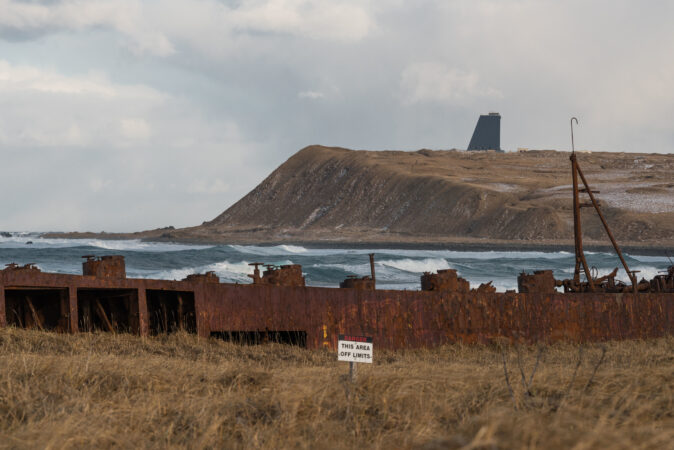
That’s in part because of their strategic locations. For example, Cobra Dane is situated in the Aleutian Islands, a chain that extends from the southwestern coast of Alaska toward Russia. The L-band phased-array radar provides critical intelligence and surveillance of foreign missile test ranges. 
Space Force to Overhaul Key Early Warning, Surveillance Radars
The Cobra Dane radar is a single faced ground-based, L-band phased-array radar located at Eareckson Air Station, Shemya, Alaska. The primary mission of COBRA DANE is to collect radar metric and signature data on foreign ballistic missile events. Additional missions include collecting space surveillance data on new foreign launches and satellites in low-earth orbit. The radar has a 95-foot diameter phased array and the capability to track and record data on as many as 120 objects simultaneously. Photo by Chief Petty Officer Brandon Raile, 11th Air Force

The sites also provide unique contributions to the Space Surveillance Network, which tracks spacecraft and debris orbiting Earth. The C-6 radar at Eglin was the Space Force’s first dedicated space surveillance radar and, due to its large transmit and receive apertures—which serve as the radar’s mouth and ears—is still one of the most powerful radars in operation today, tracking thousands of objects daily.

As such, the service is moving quickly to field the GBRD upgrades that will keep these systems operating into the future. Maj. Gen. Stephen Purdy, senior adviser to the Secretary of the Air Force for space acquisition, said last month that the Space Force approved its GBRD strategy in November, designating it a “middle tier acquisition” effort. That authority, bestowed by Congress in 2015, allows the service to fast-track certain development and procurement programs. In its solicitation this week, Space Systems Command said it expects to choose a pool of vendors for GBRD in June. 

The Space Force’s fiscal 2027 budget request includes $128 million for the program and projects its budget will include $654 million between fiscal 2028 and ‘31. The service expects to complete a preliminary design review for the upgrade in 2027 and begin developing software and hardware. The initial rapid prototyping phase will include up to four of the eight radar sites, likely three of the UEWR systems, budget documents indicate. The remaining four sites will begin the rapid fielding phase in fiscal 2030. 

Audio of this article is brought to you by the Air & Space Forces Association, honoring and supporting our Airmen, Guardians, and their families. Find out more at afa.org

Share. Facebook Twitter Pinterest LinkedIn Tumblr Email
Previous ArticleThe story of the first human tool: the humble container
Next Article Senate bars senators from prediction markets over security concerns
primereports
  • Website

Related Posts

Defense

US Army gives chaplains 90 days to remove rank insignia

June 27, 2026
Defense

NATO allies promised Trump they’d secure the Arctic; they’ve got work to do

June 27, 2026
Defense

US strikes Iranian missile, drone, radar sites

June 27, 2026
Add A Comment
Leave A Reply Cancel Reply

Top Posts

Paxton’s win over Cornyn sets up high-stakes Texas clash with Talarico

May 28, 202616 Views

Global Resources Outlook 2024 | UNEP

December 6, 202510 Views

Texas Democrat Talarico claims voting laws are rigged ahead of Paxton race

May 28, 20269 Views
Stay In Touch
  • Facebook
  • YouTube
  • TikTok
  • WhatsApp
  • Twitter
  • Instagram
Latest Reviews

Subscribe to Updates

Get the latest tech news from FooBar about tech, design and biz.

PrimeReports.org
Independent global news, analysis & insights.

PrimeReports.org brings you in-depth coverage of geopolitics, markets, technology and risk – with context that helps you understand what really matters.

Editorially independent · Opinions are those of the authors and not investment advice.
Facebook X (Twitter) LinkedIn YouTube
Key Sections
  • World
  • Geopolitics
  • Cybersecurity
  • Popular Now
  • Crypto
  • Artificial Intelligence
All Categories
  • Artificial Intelligence
  • Climate Risks
  • Crypto
  • Cybersecurity
  • Defense
  • Economy
  • Geopolitics
  • Global Markets
  • Healthcare Innovation
  • Politics
  • Popular Now
  • Science
  • Technology
  • World
  • About Us
  • Contact Us
  • Privacy Policy
  • Terms & Conditions
  • Disclaimer
  • Cookie Policy
  • DMCA / Copyright Notice
  • Editorial Policy

Sign up for Prime Reports Briefing – essential stories and analysis in your inbox.

By subscribing you agree to our Privacy Policy. You can opt out anytime.
Latest Stories
  • Can Clusters of Human-Constructed Ponds in the Arizona Desert Save a Threatened Frog?
  • Trump Picks Lance Schroyer as New ICE Director
  • Roundup, cancer, and the difference between scientific, legal causation
© 2026 PrimeReports.org. All rights reserved.
Privacy Terms Contact

Type above and press Enter to search. Press Esc to cancel.