
LIVE NEWS
  • Epic Fury has Navy rethinking carrier deployment tempo
  • New ‘trick’ fixes major flaw in neutral-atom quantum computers — inching us closer to a superpowerful system
  • Iran War Live Updates: Iran Lists Demands That Trump Deemed ‘Unacceptable’
  • Crypto and AI Could Be Dirty Words on 2026 Campaign Trail
  • TrickMo Variant Routes Android Trojan Traffic Through TON
  • AJC’s Andrew Morse steps down 3 years into $150 million reinvention : NPR
  • Türkiye Charts a Distinctive Course amid Middle East Turmoil
  • Sony Music Publishing to buy Recognition Music catalog; source says deal for $4 billion
Prime Reports
  • Home
  • Popular Now
  • Crypto
  • Cybersecurity
  • Economy
  • Geopolitics
  • Global Markets
  • Politics
  • See More
    • Artificial Intelligence
    • Climate Risks
    • Defense
    • Healthcare Innovation
    • Science
    • Technology
    • World
Prime Reports
  • Home
  • Popular Now
  • Crypto
  • Cybersecurity
  • Economy
  • Geopolitics
  • Global Markets
  • Politics
  • Artificial Intelligence
  • Climate Risks
  • Defense
  • Healthcare Innovation
  • Science
  • Technology
  • World
Home»Geopolitics»the Case for Early Action — Global Issues
Geopolitics

the Case for Early Action — Global Issues

primereportsBy primereportsMay 11, 2026No Comments6 Mins Read
Share Facebook Twitter Pinterest LinkedIn Tumblr Reddit Telegram Email
the Case for Early Action — Global Issues
Share
Facebook Twitter LinkedIn Pinterest Email


the Case for Early Action — Global Issues
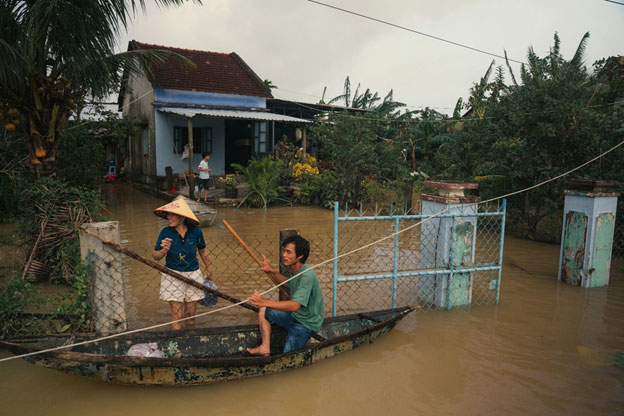
Residents in Phú Yên, Vietnam, relied on a small wooden boat during a flood. Climate change and El Niño disrupted the livelihood of millions of people in Asia and the Pacific. Credit: Pexels/Long Bà Mùi Source: ESCAP
  • Opinion by Kareff Rafisura (bangkok, thailand)
  • Monday, May 11, 2026
  • Inter Press Service

BANGKOK, Thailand, May 11 (IPS) – Climate models are converging: El Niño is likely to return by mid-2026 and could be strong. According to the World Meteorological Organization, it could emerge as early as May–July 2026, with several national hydrometeorological agencies in Asia and the Pacific already issuing alerts.

El Niño makes headlines not because it is rare, but because it amplifies climate risks. Past events have triggered major humanitarian crises, driving drought, food insecurity and public health emergencies across Asia and the Pacific. While each Niño event differs, their impacts tend to follow recognizable regional patterns.

In countries such as Indonesia, Malaysia, the Philippines and Timor Leste, strong El Niño events have repeatedly brought drought, forest fires, agricultural losses and water stress, with patterns reinforced even during the weaker 2018–2019 El Niño. These impacts provide clear signals of risks concentrated across food, water, health and livelihood systems.

In practical terms, an El Niño event is only fully established when the atmosphere reinforces the warming of oceans. As not all warmings reach that stage, this is where uncertainty lies, including how strong the event will become. While forecasts will improve in the coming months, historical impacts already indicate where risks are likely to concentrate.

To understand the risks, it helps to look at how past events have unfolded in the region. Strong events in 1971–73, 1982–83 and 1997–98 triggered widespread droughts, forest fires and vector-borne diseases, such as dengue, across South and South-East Asia and the Pacific.

While impacts vary by location, the pattern is consistent: risk intensity is highest where exposure overlaps with underlying vulnerabilities caused by poverty, food insecurity and malnutrition, as well as heavy dependence on subsistence farming.

The 2015–2016 El Niño is the strongest of this century and can serve as a useful reference should current conditions develop into a comparable event, given similar early warming patterns. The joint ESCAP and ASEAN report, Ready for the Dry Years, states that during this event, more than 70% of South-East Asia’s land area experienced drought, exposing over 200 million people to severe drought at its peak.

While El Niño affects large areas, its impacts are most severe where climatic exposure overlaps with structural vulnerability. This year, these risks are unfolding in a more complex climate and socioeconomic context, with tighter fiscal space, higher debt levels and persistent global economic uncertainty, as highlighted in the ESCAP Economic and Social Survey of Asia and the Pacific 2026.

At the same time, remittances, an important source of income for countries such as Bangladesh, Nepal, Pakistan, the Philippines and Sri Lanka are being affected, weakening a key buffer that has historically helped households cope with shocks.

Together, these pressures leave governments and households less able to absorb climate shocks than during previous El Niño cycles.

Climate change is amplifying baseline risks. Higher temperatures increase evapotranspiration (process of heat making water evaporate faster), reduce soil moisture and intensify drought conditions. The Ready for the Dry Years report shows that droughts increasingly occur under warmer conditions, magnifying their impacts.

Climate variability is now interacting with long-term warming trends, increasing systemic risks.

The implication is clear: waiting for certainty can increase exposure to avoidable losses. Historical evidence and current signals already provide a sufficient basis for early, no-regret action.

Because the impacts of El Niño align with extremes expected to intensify under climate change, there is a strong case for investing in resilience across scenarios. Three priority areas stand out.

First, turn climate forecasts into actionable decisions on the ground. Seasonal forecasts provide valuable signals, but decisions require localized insight: where water stress will emerge, where crops are likely to fail and which communities are most at risk. Advances in satellite data and analytics now allow near-real-time monitoring of soil moisture, vegetation health and water availability, and should be used to guide targeted preparedness.

Second, early financing is a no-regret investment in resilience. The impacts of El Niño are cumulative and can outlast the event itself. Acting early through social protection, support to farmers and better water management reduces long-term costs and protects hard-won development gains. In a context of constrained fiscal space, anticipatory action limits downstream losses.

Third, strengthen coordination across sectors. El Niño affects multiple sectors simultaneously, including agriculture, water, energy and public health. Coordinated responses enable faster and more efficient actions with benefits that extend beyond a single event.

Even as uncertainty remains around the strength of the evolving event, historical experience makes a clear case for early action to strengthen long-term resilience.

Kareff Rafisura is Economic Affairs Officer, ESCAP

IPS UN Bureau

© Inter Press Service (20260511075711) — All Rights Reserved. Original source: Inter Press Service

Where next?

Related news

Browse related news topics:

Latest news

Read the latest news stories:

  • El Niño Likely to Return: the Case for Early Action Monday, May 11, 2026
  • Passengers leave hantavirus-hit cruise ship in Tenerife as WHO says outbreak ‘not another COVID’ Sunday, May 10, 2026
  • First Person: Surviving death row in Thailand Sunday, May 10, 2026
  • WHO chief heads to Tenerife to oversee Sunday arrival of hantavirus-hit ship Saturday, May 09, 2026
  • Nuclear energy in the Middle East: A realistic choice or a risk? Saturday, May 09, 2026
  • Hungary’s Long Road Back Friday, May 08, 2026
  • Before the Flood, Jannat Carried Books. After the Flood, She Carried Dirty Dishes Friday, May 08, 2026
  • Gaza’s Deepening Health Crisis Leaves Hospitals Overwhelmed Friday, May 08, 2026
  • Nuclear ‘Close-Calls’ Prove Deterrence No Guarantee for Peace Friday, May 08, 2026
  • Empowering Youth Is the Fastest Path to Transforming Least Developed Countries Friday, May 08, 2026

In-depth

Learn more about the related issues:

Share this

Bookmark or share this with others using some popular social bookmarking web sites:

Link to this page from your site/blog

Add the following HTML code to your page:

El Niño Likely to Return: the Case for Early Action, Inter Press Service, Monday, May 11, 2026 (posted by Global Issues)

… to produce this:

El Niño Likely to Return: the Case for Early Action, Inter Press Service, Monday, May 11, 2026 (posted by Global Issues)

Share. Facebook Twitter Pinterest LinkedIn Tumblr Email
Previous ArticleMrBeast and top creators turn to platform gurus
Next Article Being a Present Parent Isn’t As Easy As I Thought It Would Be
primereports
  • Website

Related Posts

Geopolitics

Türkiye Charts a Distinctive Course amid Middle East Turmoil

May 11, 2026
Geopolitics

Keir Starmer Says No, He Won’t Resign

May 10, 2026
Geopolitics

So What’s the Strategy for China?

May 10, 2026
Add A Comment
Leave A Reply Cancel Reply

Top Posts

Global Resources Outlook 2024 | UNEP

December 6, 20258 Views

The D Brief: DHS shutdown likely; US troops leave al-Tanf; CNO’s plea to industry; Crowded robot-boat market; And a bit more.

February 14, 20265 Views

German Chancellor Merz faces difficult mission to Israel – DW – 12/06/2025

December 6, 20254 Views
Stay In Touch
  • Facebook
  • YouTube
  • TikTok
  • WhatsApp
  • Twitter
  • Instagram
Latest Reviews

Subscribe to Updates

Get the latest tech news from FooBar about tech, design and biz.

PrimeReports.org
Independent global news, analysis & insights.

PrimeReports.org brings you in-depth coverage of geopolitics, markets, technology and risk – with context that helps you understand what really matters.

Editorially independent · Opinions are those of the authors and not investment advice.
Facebook X (Twitter) LinkedIn YouTube
Key Sections
  • World
  • Geopolitics
  • Popular Now
  • Artificial Intelligence
  • Cybersecurity
  • Crypto
All Categories
  • Artificial Intelligence
  • Climate Risks
  • Crypto
  • Cybersecurity
  • Defense
  • Economy
  • Geopolitics
  • Global Markets
  • Healthcare Innovation
  • Politics
  • Popular Now
  • Science
  • Technology
  • World
  • About Us
  • Contact Us
  • Privacy Policy
  • Terms & Conditions
  • Disclaimer
  • Cookie Policy
  • DMCA / Copyright Notice
  • Editorial Policy

Sign up for Prime Reports Briefing – essential stories and analysis in your inbox.

By subscribing you agree to our Privacy Policy. You can opt out anytime.
Latest Stories
  • Epic Fury has Navy rethinking carrier deployment tempo
  • New ‘trick’ fixes major flaw in neutral-atom quantum computers — inching us closer to a superpowerful system
  • Iran War Live Updates: Iran Lists Demands That Trump Deemed ‘Unacceptable’
© 2026 PrimeReports.org. All rights reserved.
Privacy Terms Contact

Type above and press Enter to search. Press Esc to cancel.