

BEIRUT — As the conflict between Iran, and the US and Israel enters its second month, another battle rages on between Israel and armed Lebanese group Hezbollah.
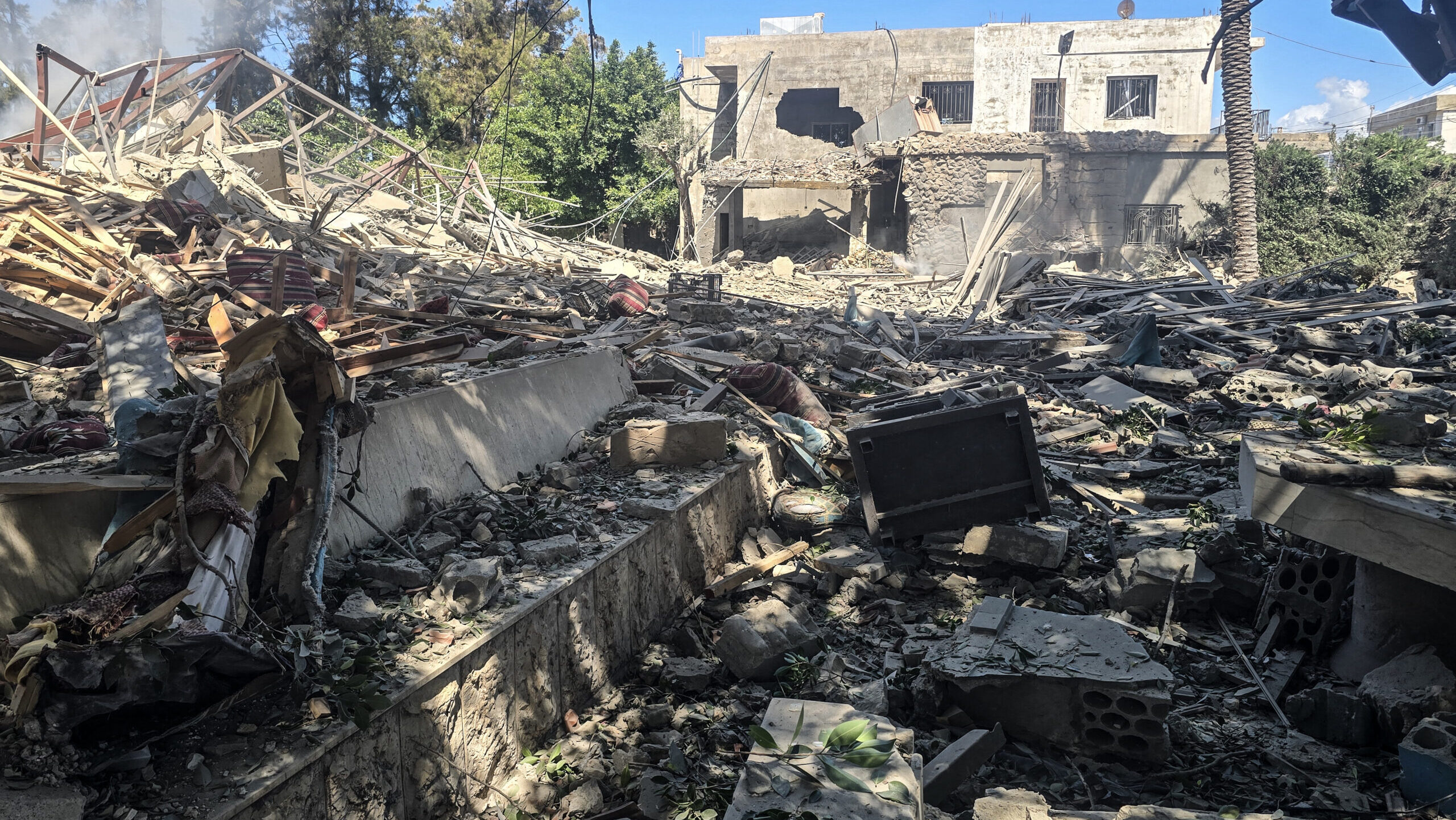
For the second time in less than three years, the Israel Defense Forces have struck villages in South Lebanon with munitions, destroyed bridges connecting the area to the rest of the country and launched a ground invasion with thousands of troops as it says it’s targeting the Iran-backed group.
The Lebanese government in early March banned Hezbollah military activities against Israel, but the Israeli government has said the Lebanese Armed Forces (LAF) haven’t done enough to take Hezbollah’s arms.
Meanwhile, Lebanese citizens who have not yet fully recovered from the 2024 war between Israel and Hezbollah are caught in the crossfire, facing the destruction of their homes and villages once more.
While many villagers have decided to flee their homes in the south, Breaking Defense had conversations with friends, family and others from the region who decided to stay.
“My house is my only shelter, and I don’t want to leave it,” one villager said.
That was the prevailing sentiment among those with whom Breaking Defense spoke. One friend said they’re holding on to their last ray of hope to live their “life in dignity.”
Meanwhile the LAF evacuated towns that border Israel, like Ain Ebel, Debel and Rmeich on Tuesday, leaving those who chose to stay with scarce or no medical assistance or food supplies.
Those who Breaking Defense spoke to understandably have emotional ties to their villages. A second villager said, “I was born in this town and won’t leave it no matter what happens. I will die here.”
While the villagers and friends projected great strength in conversation, none of them denied the difficulty of their situation, marked by long nights filled with barrages of missiles, drones and explosions.
A third villager said that nights are “tragic” and children are waking up frightened and shivering, afraid that it is “doomsday.”
In a video circulating on social media, a priest from Rmeich is seen saying, “We don’t accept the Lebanese Armed Forces [order] to leave our village. We stand firm with our Lebanese identity. In 2024, the same [scenario] happened, [but] we stayed. We refuse their [Lebanese Armed Forces] withdrawal,” he said. A few hours later, the LAF withdrew from these bordering towns.
Former Lebanese Navy commander and strategic expert Nazih Baroudi, however, told Breaking Defense that the LAF is not withdrawing from the South, but is rather repositioning its troops.
“The army is repositioning militarily, because it cannot remain behind the ground incursion, to avoid becoming trapped,” he said.
Conflict Encroaches On Beirut
Those who left — especially those in towns the IDF marked in red, signaling that their residents should leave — were displaced to shelters, such as schools, provided by the government, or left to make their own path and rent houses in the cities and towns of Beirut or Mount Lebanon.
But even in northern parts of the country, like Beirut, the war is felt heavily, with rockets flying overhead and debris falling on cities for the first time.
“It seems that the shadow of war is following us everywhere we go,” a displaced villager living in Beirut told Breaking Defense after a night with four consecutive sonic booms that shook their house.
Further, for the first time since the conflict began, Israel struck Mansourieh, a Christian area in Beirut.
Baroudi added that what happens in Lebanon next depends on what happens in Iran.
“If the Iran war is prolonged, Israel will take advantage and will invade all southern Litani sector, and this will be very risky to Lebanon,” he said, referring to the Litani River that runs across Southern Lebanon.
Wehbe Katicha, a retired LAF general, said he expects that the conflict on the Lebanese front will drag on for much longer.
“The Israelis are slowly advancing towards the Litani River. According to the course of the operation, the area south of the Litani River is being emptied of its inhabitants, and even the area north of the Litani River,” he said. “It seems that Israel will empty the area of its inhabitants even beyond [north of] the Litani River, because emptying the south of its inhabitants leads to clearing the south of Hezbollah, which cannot operate militarily without a supportive environment to store its ammunition and weapons.”
