

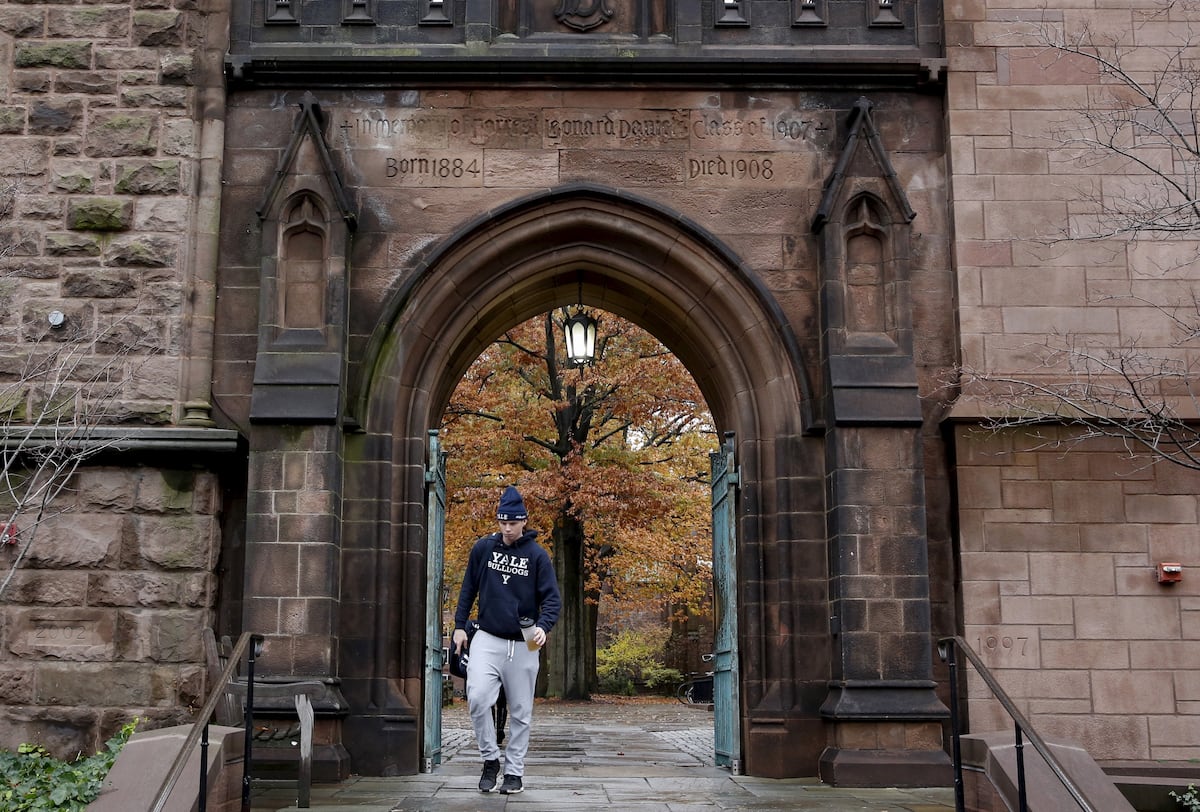
When the U.S. Marine Corps selected me as a fellow at Yale University’s International Security Studies Program and the Brady-Johnson Program in Grand Strategy in 2012, I was not exactly sure how the year would unfold.
What I did know was that I had already spent nearly two decades developing the tactical and operational skills required of a Marine officer through professional military education, various command and staff assignments, and multiple overseas deployments. I did not need additional instruction in tactics, the mechanics of military operations or further cultivation of the warrior ethos that years of military service had already instilled. What I needed at that stage of my career was a broader perspective on strategy and leadership.
And that is precisely what the fellowship provided.
The Pentagon’s recent decision to eliminate Senior Service College fellowships at Ivy League and other leading civilian universities deserves reconsideration. These fellowships help prepare senior officers for strategic responsibilities while also giving civilian students and scholars greater insight into the complexities of employing military power. By the time fellows are selected, they have already demonstrated the tactical, operational and joint competencies expected of Senior Service College candidates. Programs like this build on that foundation by immersing officers in the intellectual debates that shape national strategy.
Conversations at Yale were never one-sided and emphasized critical thinking when examining complex issues. I participated in seminars alongside some of the nation’s most accomplished scholars and practitioners. Professors John Lewis Gaddis and Paul Kennedy, along with the late Charles Hill, served as my primary mentors. I shared an office with Ambassador John Negroponte, who offered valuable insights on global affairs, and I had frequent opportunities for one-on-one conversations with distinguished policymakers, journalists and authors.
Engaging with thinkers and practitioners of that caliber challenged me to examine national security problems from a vantage point I would not have had at a military service college. Colleagues who attended fellowships at other leading universities such as Harvard, Stanford, Johns Hopkins and MIT had similar experiences.
I was well aware of Yale’s past relationship with the military before arriving on campus. Like several Ivy League schools, Yale implemented policies during the Vietnam War that reduced the presence of active-duty military personnel at the university and had only recently reestablished its ROTC program when I arrived. Coming straight from a deployment to Afghanistan, a few friends joked that I might find the atmosphere less welcoming in New Haven than in Helmand Province. Nothing could have been further from the truth, and that kind of thinking reflects some of the inaccurate and outdated stereotypes that persist between the military and academia — stereotypes that programs like these fellowships help overcome.
Yale, like other civilian universities that host military fellows, also benefited from the exchange. Much of my time there involved sharing my experiences with members of the university community who were eager to better understand how the military functions. Many welcomed the opportunity to engage with someone who had spent much of his life in uniform, and I soon found myself invited to participate in seminars and panel discussions across campus where military insight was often lacking. Some of the best students I have ever met regularly stopped by my office with questions sparked by events in the news, trying to understand how civilian casualties occur in combat or how commanders balance protecting noncombatants with accomplishing the mission and safeguarding their forces.
The Pentagon has argued that these fellowships expose officers to ideological environments that do not align with the military’s needs and that professional military education institutions can provide everything officers require. That was not my experience. Programs like the one at Yale allow senior officers to engage directly with scholars and future policymakers who might otherwise have little or no exposure to those serving in the military. This interaction actually helps reduce misconceptions on both sides and strengthens the civil-military dialogue on which national strategy depends.
As someone who later spent eight years teaching at the U.S. Naval War College, I have enormous respect for the role our professional military education institutions play. Service colleges are essential for preparing officers for higher command and increasing responsibility. Educational opportunities at leading civilian universities offer something that cannot easily be replicated in a military classroom, and together they form a complementary system for developing future strategic leaders.
At a time when the United States faces increasingly complex global challenges, developing leaders who can think across disciplines is more important than ever. Before dismantling programs that have long contributed to the intellectual development of the officer corps, the Pentagon should carefully reconsider the full value they provide to the military and the nation it serves.
Craig Wonson is a retired U.S. Marine Corps colonel and combat veteran who served for 32 years on active duty. He was the first Marine Corps Fellow in Yale University’s International Security Studies and Grand Strategy programs, and later taught at the U.S. Naval War College.
