

Donald Trump has done his best to crush the green shoots of the global, post-pandemic economic recovery – nowhere more so than in the UK.
The US president’s vandalism can be seen across the economic landscape, especially in the property sector, which has become more sensitive to international events since the spread of Covid-19 disrupted long-established supply chains and sent the cost of raw materials soaring.
What should be a strictly domestic consideration – what to build and where – has been shaped by the backwash from one geopolitical crisis after another, inducing a long period of stasis.
The latest UK industry statistics come hot on the heels of Trump’s attack on Iran.
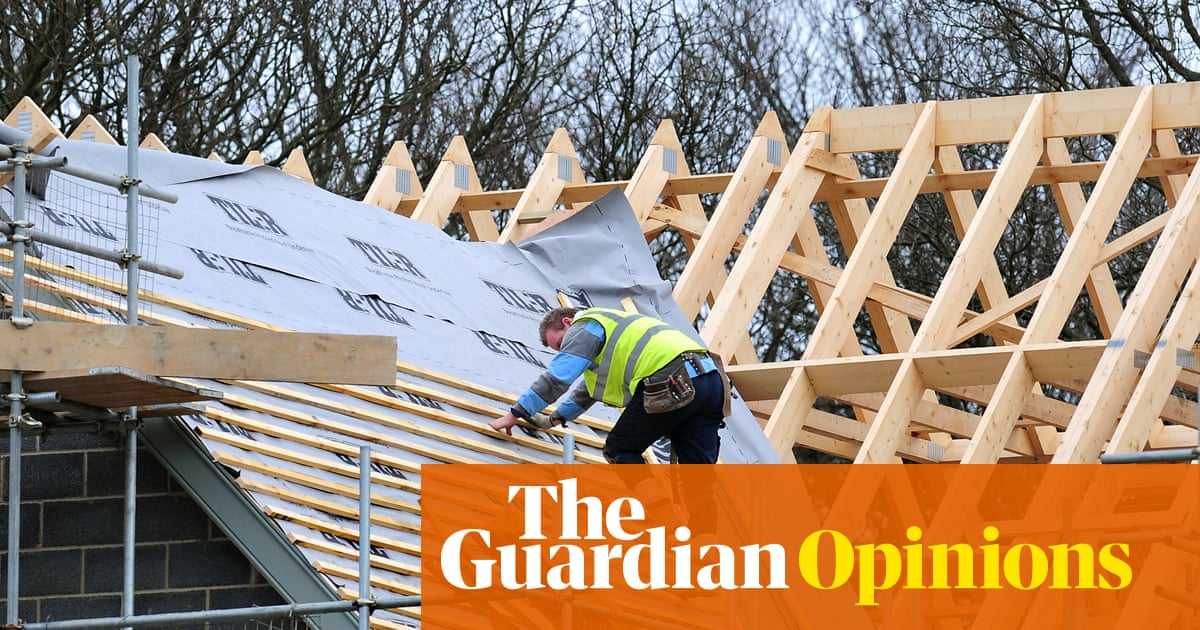
The data provider Glenigan said last week the value of new projects had dropped by more than a third in the three months to the end of February.
Projects in the category marked “major works” – worth more than £100m – have suffered the most. Last November, with Rachel Reeves signalling a relatively benign budget, major developers were gung-ho and the number of major projects was on the rise. Not any more. Trump has slammed on the brakes.
Office building, civil engineering projects and residential housing are all affected by the slowdown.
It might seem strange to focus on how many spades are going into the ground across the UK when Trump’s epic miscalculation in the Middle East is having far-reaching effects beyond the property industry. With Iran almost certain to exact a high price by keeping oil and gas prices elevated, there could be terminal knock-on effects for liberal democracies facing yet another inflation shock.
Nevertheless, the UK economy is underpinned by an obsession with property, and the failure to get the market moving is another major blow to Reeves’s growth plans.
In many ways, Britain’s economy is principally a property market with a sideline in other services and manufacturing. The financial services sector is underpinned by property wealth and makes its money from loans tied to homes, offices and factories. Buying and selling property is a national pastime, along with the surveying, designing and maintaining it.
The UK runs a current account deficit because it buys more from abroad than it sells, and this gap is largely closed by selling assets, much of it property.
Consumer spending, too, is affected by people moving home and buying new things. More than that, spending reflects how wealthy people feel – and most of their wealth is in property.
Much of the difficulty faced by building firms, property developers and the servicing companies that facilitate deals stems from the reluctance of consumers to buy homes. Of course, affordability plays a big part in any decision, but there is also a risk in making such a large purchase even when you have the means.
In January, Trump threatened Greenland’s existence as an independent nation under Danish protection. At the time it felt like a bizarre but damaging conflict was coming to Europe courtesy of the Pentagon. In February, the US supreme court ruled Trump’s tariffs illegal, only for the president to impose a fresh set of import charges that bypassed the judgment. Then came the Iran conflict.
Much of the Glenigan survey covered this period of extreme instability, casting a cloud over the industry, as it has over manufacturing and the services sector since Trump began pushing the boundaries of presidential power.
Allan Wilen, Glenigan’s economics director, said: “We’re in a deeply worrying position where market volatility means prices are erratically fluctuating on a daily basis, dictated by the direction of international affairs. As our results show, the decline in construction activity has deepened and hopes for a recovery in the second half of the year now hang in the balance.”
It presents Reeves and local councils with a double dilemma. The first relates to the current slowdown and the loss of tax income as projects remain stuck. The second relates to the housebuilding sector and the over-reliance on the private sector to bring forward schemes.
While developers want a steady stream of work and dislike the disruption caused by Trump as much as anyone, it does provide an opportunity to turn the screw on public authorities – pushing them to drop requirements for public amenities and to target buildings at more affluent buyers.
There are growing reports from around the country of developers demanding cuts in the number of affordable homes.
For instance, British Land is in dispute with Southwark council over a tower the developer wants to make taller while cutting the number of affordable apartments from 35% to 3%. The London mayor, Sadiq Khan, has said he will adjudicate on the dispute.
It will not be the last case – just a small instance of a much larger problem. It also shows that Labour’s aversion to directly managing these housing projects, rather than trying to control them from a distance, needs to end.
Councils and mayors need to be the commissioners for all new schemes, with building firms as contractors. If the Dutch can do it, then so can the UK.
Trump is going to be around for several more years and greater self-sufficiency is going to be paramount. It is clear that if housebuilding is left to the private sector, we will be denied the homes, amenities, workspaces and landscapes we deserve. The sector will remain in the doldrums and continue to miss all government targets.
