
LIVE NEWS
  • Tehran says ‘progress’ made in talks with US
  • Google and OpenAI are making a run at Claude’s desktop moat, and Anthropic is making it easy
  • DeBriefed 17 April 2026: Fossil-fuel power slumps | ‘Super’ El Niño warning | Afghanistan’s climate struggle
  • Senior official ousted over Peter Mandelson security row to face MPs
  • Scientists say this type of olive oil could boost brain power
  • The Best Smart Home Accessories to Boost Your Curb Appeal (2026)
  • Trinidad and Tobago police uncover 56 bodies, mostly children, at cemetery | Crime News
  • The best TV antennas to buy in 2024
Prime Reports
  • Home
  • Popular Now
  • Crypto
  • Cybersecurity
  • Economy
  • Geopolitics
  • Global Markets
  • Politics
  • See More
    • Artificial Intelligence
    • Climate Risks
    • Defense
    • Healthcare Innovation
    • Science
    • Technology
    • World
Prime Reports
  • Home
  • Popular Now
  • Crypto
  • Cybersecurity
  • Economy
  • Geopolitics
  • Global Markets
  • Politics
  • Artificial Intelligence
  • Climate Risks
  • Defense
  • Healthcare Innovation
  • Science
  • Technology
  • World
Home»Science»Scientists discover mirror of our solar system in 2 exoplanets forming around a star
Science

Scientists discover mirror of our solar system in 2 exoplanets forming around a star

primereportsBy primereportsMarch 24, 2026No Comments4 Mins Read
Share Facebook Twitter Pinterest LinkedIn Tumblr Reddit Telegram Email
Scientists discover mirror of our solar system in 2 exoplanets forming around a star
Share
Facebook Twitter LinkedIn Pinterest Email


Astronomers have observed two planets forming around a distant infant star, thus discovering a planetary system that offers us a look at the appearance of the solar system over 4 billion years ago.

The infant star in question is named WISPIT 2, and it’s located around 437 light-years away with an estimated age of around 5.4 million years old. If that makes this star sound anything but an infant, consider that our middle-aged star, the sun, is 4.6 billion years old.

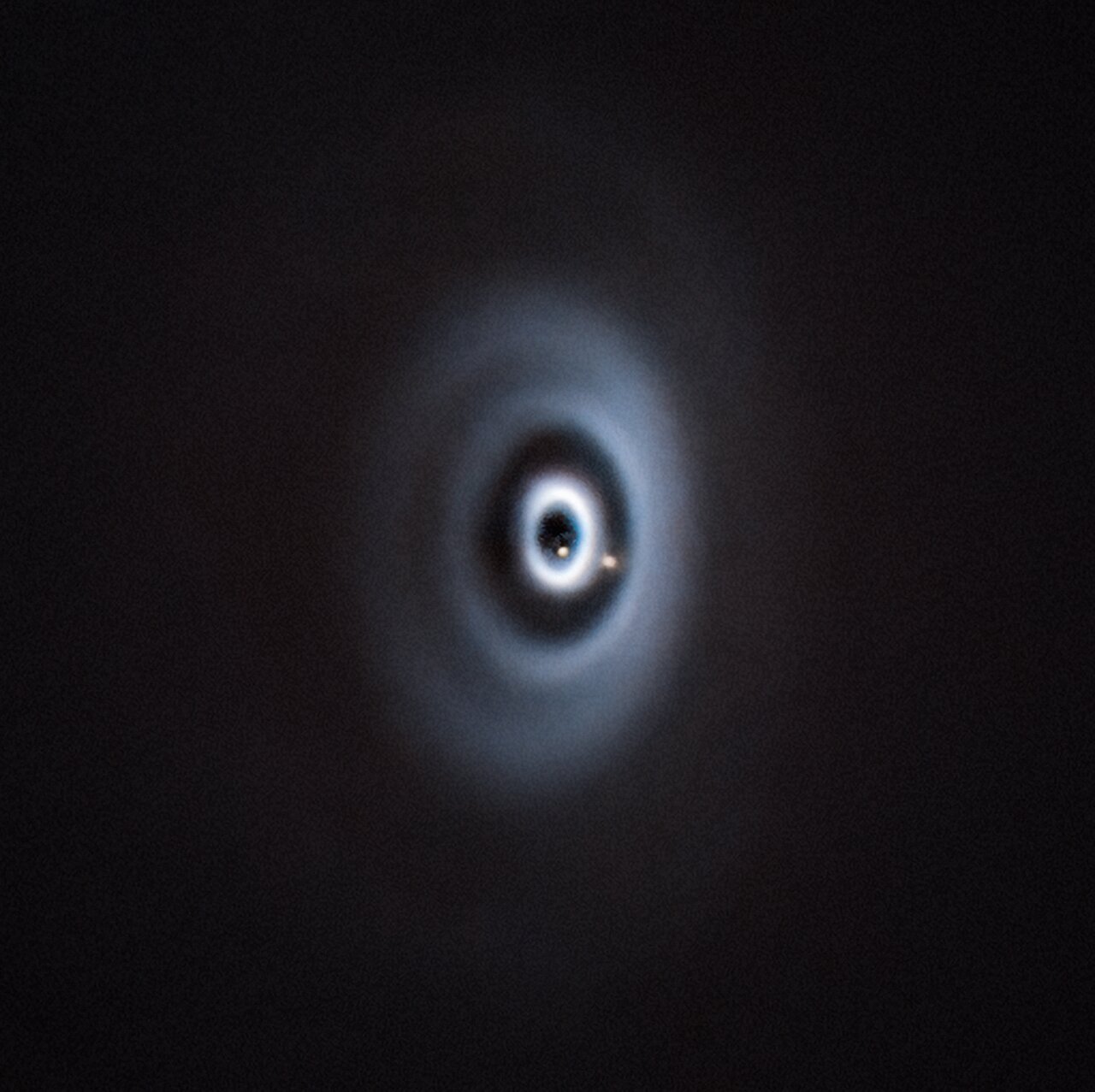
WISPIT 2 is surrounded by a donut-shaped cloud of gas and dust called a protoplanetary disk in which scientists have now detected two planets, designated WISPIT 2b and WISPIT 2c. And excitingly, there are structural hints with WISPIT 2’s protoplanetary disk of more forming protoplanets. “WISPIT 2 is the best look into our own past that we have to date,” discovery team leader Chloe Lawlor of the University of Galway, Ireland, said in a statement. “These structures suggest that more planets are currently forming, which we will eventually detect.”

Article continues below


You may like

WISPIT 2 is only the second system in which astronomers have successfully detected two forming planets. The other system, PDS 70, lacks the extended disk and the distinct gaps and bands seen around WISPIT 2. That means that this system offers an unparalleled look at how planetary systems like our own solar system are formed.

“WISPIT 2 gives us a critical laboratory not just to observe the formation of a single planet but an entire planetary system,” team member Christian Ginski of the University of Galway said in the statement.

The discovery history of WISPIT 2

WISPIT 2b was the first infant planet discovered around this infant star, detected last year and determined to have a mass around five times that of Jupiter and orbiting its parent star at a distance equivalent to 60 times the distance between Earth and the sun.

Following this discovery, astronomers found hints of an additional object closer to WISPIT 2, confirming this to be a planet using the Very Large Telescope (VLT) and the VLT Interferometer (VLTI). The newly found planet, WISPIT 2c, orbits its parent star at around 15 times the distance between Earth and the sun, meaning it’s about four times closer to its star than WISPIT 2b is.

Breaking space news, the latest updates on rocket launches, skywatching events and more!

The researchers then captured an image of this forming planet using the VLT’s Spectro-Polarimetric High-Contrast Exoplanet Research (SPHERE) instrument, further confirming it is a planet with another VLT instrument, GRAVITY+.

“Critically, our study made use of the recent upgrade to GRAVITY+ without which we would not have been able to get such a clear detection of the planet so close to its star,” team member Guillaume Bourdarot of the Max Planck Institute for Extraterrestrial Physics in Germany said in the statement.

Concentric gray wispy rings have two glowing dots stashed within.

The young star WISPIT 2 as seen by the VLT with two forming protoplanets indicated by dark gaps in the protoplanetary disk (Image credit: ESO/C. Lawlor, R. F. van Capelleveen et al.)

Both WISPIT 2b and WISPIT 2c are carving grooves in the protoplanetary disk around their parent star. This is happening because, as they orbit the star, their gravitational influences collect material from the disk to facilitate their growth.

At least one more planet is indicated in the system by a less-pronounced gap —further out from the system’s central star than WISPIT 2b sits. The team hopes this third planet will be visible with the Extremely Large Telescope (ELT), currently under construction in the Atacama Desert region of northern Chile.

“We suspect there may be a third planet carving out this gap, potentially of Saturn’s mass, owing to the gap’s being much narrower and shallower,” Lawlor said.

The team’s research was published on Tuesday (March 24) in The Astrophysical Journal Letters.

Share. Facebook Twitter Pinterest LinkedIn Tumblr Email
Previous ArticleWhen are UEFA’s World Cup 2026 playoffs, and which nations are involved? | Sport News
Next Article Deadly Iran school strike casts shadow over Pentagon’s AI targeting push
primereports
  • Website

Related Posts

Science

Electric vehicle owners could earn thousands by supporting power grid

April 18, 2026
Science

700-year-old mummy from Bolivia contains earliest confirmed evidence of strep throat bacteria in the Americas

April 18, 2026
Science

Science behind the scenes

April 18, 2026
Add A Comment
Leave A Reply Cancel Reply

Top Posts

Global Resources Outlook 2024 | UNEP

December 6, 20258 Views

The D Brief: DHS shutdown likely; US troops leave al-Tanf; CNO’s plea to industry; Crowded robot-boat market; And a bit more.

February 14, 20264 Views

German Chancellor Merz faces difficult mission to Israel – DW – 12/06/2025

December 6, 20254 Views
Stay In Touch
  • Facebook
  • YouTube
  • TikTok
  • WhatsApp
  • Twitter
  • Instagram
Latest Reviews

Subscribe to Updates

Get the latest tech news from FooBar about tech, design and biz.

PrimeReports.org
Independent global news, analysis & insights.

PrimeReports.org brings you in-depth coverage of geopolitics, markets, technology and risk – with context that helps you understand what really matters.

Editorially independent · Opinions are those of the authors and not investment advice.
Facebook X (Twitter) LinkedIn YouTube
Key Sections
  • World
  • Geopolitics
  • Popular Now
  • Artificial Intelligence
  • Cybersecurity
  • Crypto
All Categories
  • Artificial Intelligence
  • Climate Risks
  • Crypto
  • Cybersecurity
  • Defense
  • Economy
  • Geopolitics
  • Global Markets
  • Healthcare Innovation
  • Politics
  • Popular Now
  • Science
  • Technology
  • World
  • About Us
  • Contact Us
  • Privacy Policy
  • Terms & Conditions
  • Disclaimer
  • Cookie Policy
  • DMCA / Copyright Notice
  • Editorial Policy

Sign up for Prime Reports Briefing – essential stories and analysis in your inbox.

By subscribing you agree to our Privacy Policy. You can opt out anytime.
Latest Stories
  • Tehran says ‘progress’ made in talks with US
  • Google and OpenAI are making a run at Claude’s desktop moat, and Anthropic is making it easy
  • DeBriefed 17 April 2026: Fossil-fuel power slumps | ‘Super’ El Niño warning | Afghanistan’s climate struggle
© 2026 PrimeReports.org. All rights reserved.
Privacy Terms Contact

Type above and press Enter to search. Press Esc to cancel.