

“A plague is upon us” may have been a familiar cry in ancient Jordan, where a mysterious disease killed large numbers of people and left a lasting mark on society and history.
Today, researchers are uncovering new details about that crisis. An interdisciplinary team from the University of South Florida is studying the Plague of Justinian and its far-reaching effects. The group, led by Rays H. Y. Jiang, an associate professor in the College of Public Health, has published a third paper in an ongoing series examining what is believed to be the first recorded outbreak of bubonic plague in the Mediterranean.
Their latest study, “Bioarchaeological signatures during the Plague of Justinian (541-750 CE) in Jerash, Jordan,” appears in the Journal of Archaeological Science. It expands scientific understanding of the outbreak that killed millions across the Byzantine Empire.
“We wanted to move beyond identifying the pathogen and focus on the people it affected, who they were, how they lived and what pandemic death looked like inside a real city,” Jiang said.
A Mass Grave Reveals the Scale of Death
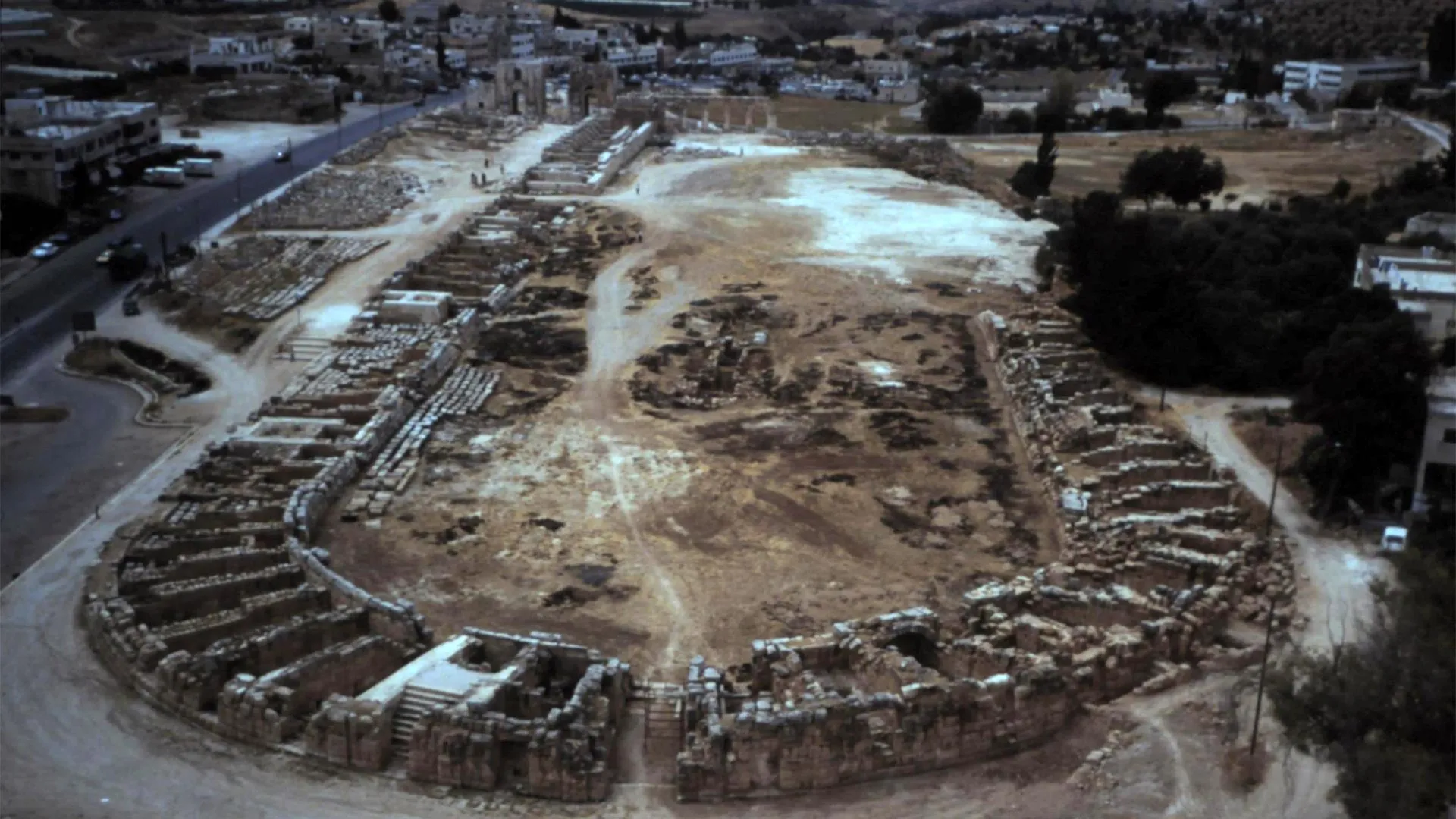
At the height of the Plague of Justinian, affected individuals came from a wide range of communities that were often disconnected from one another. In death, however, they were brought together. Large numbers of bodies were placed quickly on top of pottery debris in an abandoned public area, which became the central focus of this study.
Jiang served as principal investigator, working with colleagues from USF’s Genomics, Global Health Infectious Disease Research Center and departments including anthropology, molecular medicine and history. Additional contributions came from archaeologist Karen Hendrix at Sydney University Australia and a DNA laboratory at Florida Atlantic University. Earlier research in the series focused mainly on Yersinia pestis, the bacterium responsible for plague. This new work explores how the disease affected society in both the short and long term, and what lessons it may hold today.
“The earlier stories identified the plague organism,” Jiang said. “The Jerash site turns that genetic signal into a human story about who died and how a city experienced crisis.”
First Confirmed Plague Mass Grave
Historical accounts describe widespread disease during the Byzantine era, but many suspected plague burial sites have lacked firm proof. Jerash now stands as the first location where a plague-related mass grave has been confirmed through both archaeological evidence and genetic testing.
Researchers determined that the burial represents a single event, unlike traditional cemeteries that develop gradually. In Jerash, hundreds of individuals were buried within a matter of days. This discovery reshapes understanding of the First Pandemic by providing clear evidence of large-scale mortality and offering insight into how people lived, moved and became vulnerable within ancient urban environments.
Mobility and Hidden Connections
The findings also help resolve a long-standing question. Historical and genetic data indicate that people traveled and mixed across regions, yet burial evidence often suggests communities remained local.
The Jerash site shows that both patterns can coexist. Migration typically unfolded slowly over generations and blended into everyday life, making it difficult to detect in standard burial grounds. During a crisis, however, individuals from more mobile backgrounds were brought together in one place, making those hidden connections visible.
Evidence suggests the individuals buried in Jerash belonged to a mobile population that was part of the wider urban community. Normally spread across the region, they were united in a single burial during a moment of crisis.
Understanding the Human Impact of Pandemics
“By linking biological evidence from the bodies to the archaeological setting, we can see how disease affected real people within their social and environmental context,” Jiang said. “This helps us understand pandemics in history as lived human health events, not just outbreaks recorded in text.”
The research is helping shift how scientists view pandemics, emphasizing not only how they begin and spread but also how they affect daily life and social structures. Dense cities, travel and environmental changes played a role then, much as they do today.
“Pandemics aren’t just biological events, they’re social events, and this study shows how disease intersects with daily life, movement and vulnerability,” Jiang said. “Because pandemics reveal who is vulnerable and why, those patterns still shape how disease affects societies today.”
Research Team
In addition to Jiang, the USF team on the three papers included:
- Swamy R. Adapa, research and development scientist, Department of Global Environmental and Genomic Health Sciences, COPH
- Andrea Vianello, PhD, visiting research fellow, Department of Anthropology, College of Arts and Sciences
- Elizabeth Remily-Wood, proteomics core director, Department of Molecular Medicine, Morsani College of Medicine
- Gloria C. Ferreira, PhD, professor, Department of Molecular Medicine, Morsani College of Medicine and College of Arts and Sciences
- Michael Decker, PhD, Maroulis Professor of Byzantine History and Orthodox Religion, Department of History, College of Arts and Sciences
- Robert H. Tykot, PhD, professor, Department of Anthropology, College of Arts and Sciences
