

WASHINGTON—The United States and its allies currently face what might be the most daunting and comprehensive set of military threats since World War II. US adversaries are deepening their alignment: Russia and North Korea are now formal military allies, and China is deepening its relationship with Russia and North Korea. Earlier this week, Chinese President Xi Jinping met with North Korean leader Kim Jong Un in Pyongyang. At the same time, Russia and China are currently providing support to Iran’s military efforts against the United States, Israel, and Gulf states.
There are many dangers that could result from increasing cooperation among US adversaries. But perhaps the most daunting is that if major conflict arose in one region, the likelihood of it spreading globally is high, especially if China, Russia, and North Korea decide that coordinated attacks are the best chance of dividing US attention and resources. This possibility puts a high premium on the ability of US and allied forces to operate seamlessly together, and it underscores that US allies need to take on larger roles in combined military operations.
A generational opportunity
In response, US defense budgets, as well as those of allies in Europe and the Indo-Pacific, have entered a period of sustained growth. Germany, in particular, has embarked on a massive increase in its defense program, with spending projected to double over the next five years. Similar developments are underway in the Indo-Pacific, where Japan, Australia, and South Korea are increasing defense spending and adjusting force posture in response to a more complex and threatening security environment.
At the 2025 NATO Summit, allies committed to expanding defense and security investment in ways that extend beyond traditional military capability. At The Hague, allies agreed to increase their spending on infrastructure, cyber resilience, industrial capacity, and other defense-related capacities to 1.5 percent of their gross domestic product (GDP) by 2035—in addition to their pledge to spend 3.5 percent of GDP on defense.
This level of investment is significant not only because of its scale, but also because of its content and timing. Many of these resources are being directed toward new systems, new architectures, and new approaches to warfare. In some cases, spending decisions are a direct result of military lessons from the ongoing Russian invasion of Ukraine.
This creates a generational opportunity. But the issue is not simply how much capability is developed. It is also how that capability is developed. In particular, this moment raises the question of whether interoperability will be built into these systems from the outset or addressed later through post hoc integration efforts. The answer will have a direct impact on whether coalition forces are able to operate as a coherent system in future conflicts.
Interoperability can be understood as the common language of coalition warfare. It is the set of shared standards, processes, and capabilities that allows forces from different nations to operate together effectively. When that language is well developed, coalition operations can be coordinated and efficient. When it is incomplete, additional effort is required to achieve the same result.
Allies must seize this moment to strengthen that common language while systems are still being designed and resources are still being allocated. Taking advantage of that opportunity will require deliberate choices about how capabilities are developed, which types of capabilities are developed, and how allies choose to coordinate their investments.
Interoperability as an ongoing effort
Interoperability has long been a focus within NATO and other alliance structures. Over time, significant progress has been made in areas such as communication systems, operational procedures, and joint training. These efforts have enabled coalition operations in a range of contexts and have demonstrated the value of sustained cooperation.
At the same time, experience has shown that work toward interoperability must be continuous. As new technologies are introduced and operational concepts evolve, new challenges emerge. Differences in system design, data standards, and organizational approaches can create friction that must be addressed through ongoing effort.
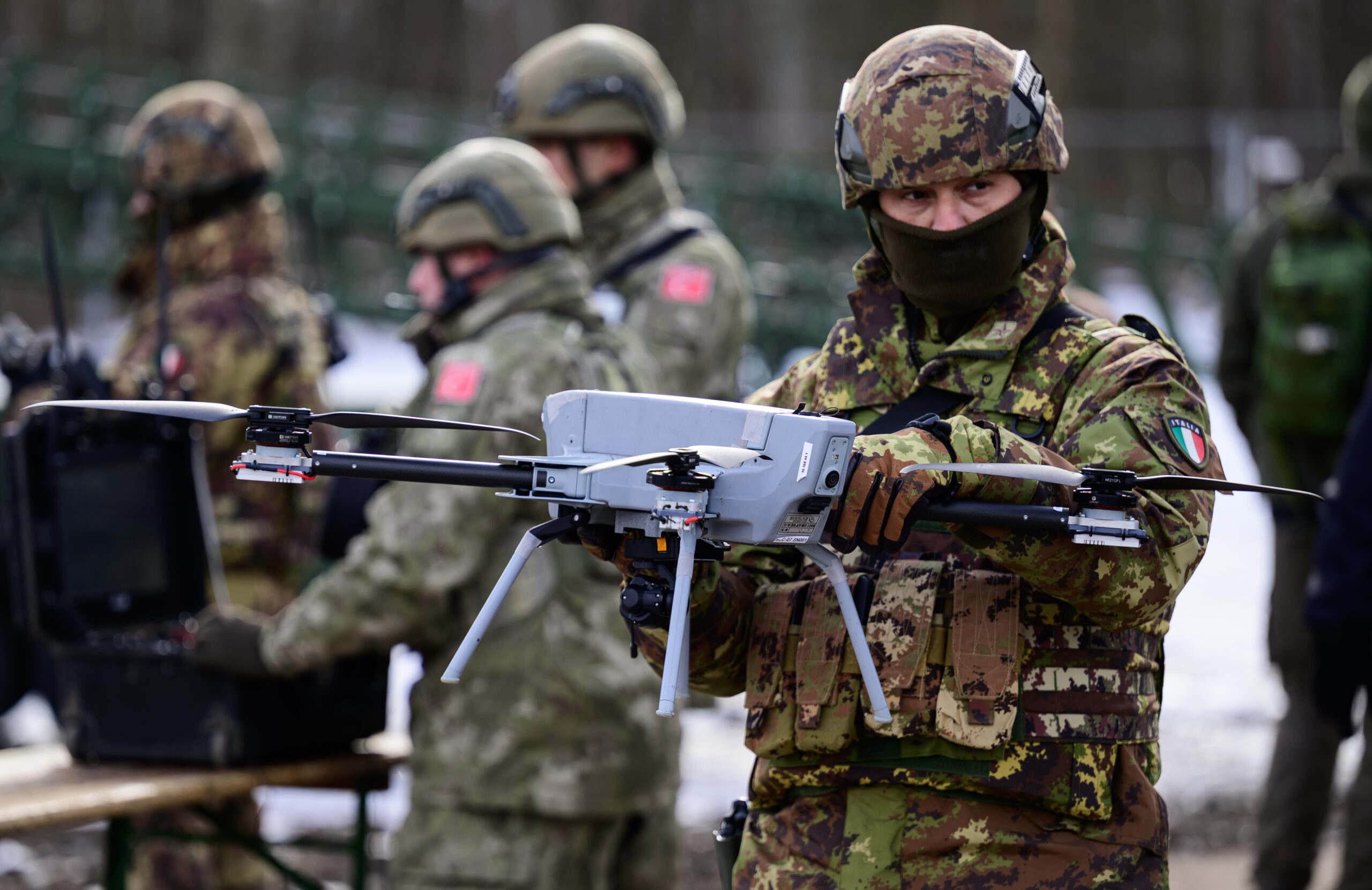
The scale of current defense investments means that many new systems are being developed or planned simultaneously across allied nations. These systems include traditional platforms as well as a wide variety of uncrewed systems, data architectures, communication networks, and decision-support tools.
Decisions made during this period will shape the structure of allied forces for decades. This includes decisions about system architecture, data standards, and operational concepts. If interoperability is not considered during this phase, it may be more difficult to achieve later. Or worse, the disconnects among US forces and those of US allies may only be realized in the heat of high-intensity combat operations, leading to potentially catastrophic losses.
Historically, interoperability has often been addressed after systems are fielded. This approach has required additional effort to integrate systems that were not designed to work together. While this has been successful in many cases, it can also introduce inefficiencies and delays.
The current investment environment provides an opportunity to take a different approach. By incorporating interoperability into the design process, allies can reduce the need for subsequent integration efforts and create systems that are more naturally compatible.
Aligning capability, geography, and resources
The requirements for interoperability are not uniform across regions, and differences in geography and operational focus will shape how allies develop and employ capabilities. In Europe, where land forces and territorial defense remain central, interoperability challenges are often tied to ground systems, logistics networks, command structures, and the integration of long-range fires that must function across national boundaries. In the Indo-Pacific, where operations are more distributed and maritime in nature, the emphasis shifts toward intelligence, surveillance, and reconnaissance, maritime awareness, and the ability to sustain and coordinate operations across vast distances. While many capabilities are relevant in both theaters, the operational context shapes where interoperability demands are most acute.
These regional differences do not reduce the importance of interoperability. The fact that allies are building different forces increases the need for those forces to operate as part of a coherent system. Interoperability is not about uniformity. It is about ensuring that different capabilities can function together in coordinated and effective ways.
As allies increase defense spending, they are making decisions that will shape their forces for decades. These decisions are often driven by national priorities, industrial considerations, and domestic constraints. While these factors are understandable, they can lead to fragmentation if they are not aligned with a broader coalition framework.
Interoperability is closely tied to how resources are allocated and how programs are structured. Budgets determine which systems are developed, which technologies are prioritized, and how quickly capabilities are fielded. If interoperability is not embedded in these decisions, it becomes more difficult to achieve later.
This challenge becomes more significant as new technologies shape the future force. Investments in data systems, artificial intelligence (AI), and autonomous platforms are going to be increasingly central to modern military capabilities. These systems depend on specific architectures and standards that may not align across nations. Without coordination, these differences risk creating barriers to integration at the point where interoperability is most critical. Moreover, as the integration of newer, advanced technologies such as AI increases, the speed and complexity of multi-domain operations will also likely grow significantly. Going forward, this puts an even higher premium on deeper interoperability among US and allied forces.
Aligning capability development across regions therefore requires more than shared strategy. It requires coordination in how resources are allocated, how programs are designed, and how systems are developed. This includes establishing common standards where possible, identifying areas for cooperative development, and ensuring that timelines for capability development are compatible across allies.
Next steps
If this moment is defined by the scale of allied investment, then the central challenge is ensuring that these investments produce a force that can operate as a coherent system. That outcome will not occur by default. It will require decisions that move interoperability from a stated priority to a condition that shapes how capabilities are built.
First, interoperability should be treated as a requirement for new capability development. In current practice, interoperability is often included as a design consideration, but it rarely determines whether a program proceeds. A more disciplined approach would require systems to demonstrate their ability to operate within a coalition environment before reaching key acquisition milestones. This would shift interoperability from something that is validated in exercises to something that directly influences program approval and continuation.
Second, the United States and its allies should establish a limited set of shared architectural non-negotiables for future systems. Efforts to achieve interoperability often attempt to accommodate a wide range of national approaches, which can result in complex and fragile integration. A more effective model would define a small number of core standards in areas such as data, communications, and decision support that all new systems must meet. This would provide a stable foundation for interoperability while allowing flexibility in other aspects of capability development.
Third, investment decisions should explicitly account for “interoperability debt.” When systems are developed without regard for coalition integration, the cost is deferred rather than avoided. It reappears later in the form of integration challenges, operational workarounds, and reduced effectiveness. Incorporating an assessment of interoperability debt into budget and acquisition decisions would make these tradeoffs visible and encourage earlier alignment during the development process.
Acting while the window is open
The current period of increased defense spending represents a significant, potentially historic, opportunity to shape the future of allied military capability. The scale of investment and the pace of development create a window in which important decisions are being made.
Interoperability should be a central consideration during this period. By incorporating it into the design and development of new systems, allies can create a more integrated and effective force.
This is not simply a matter of improving efficiency. It is about ensuring that coalition operations can achieve their intended objectives. As the security environment continues to evolve, the ability of allies to operate together effectively will remain a key factor in determining military outcomes.
