


Minnesota has enacted the most far-reaching crackdown on massively popular services like Kalshi and Polymarket.
Steve Karnowski/Associated Press
hide caption
toggle caption
Steve Karnowski/Associated Press
Minnesota Gov. Tim Walz has signed the nation’s first law banning prediction market sites from operating in the state, and in response, the Trump administration has sued, teeing up a legal battle over the most far-reaching crackdown on popular services like Kalshi and Polymarket.
It comes as states confront a growing standoff with the Trump administration over how to regulate the industry, which allows people to bet on virtually anything.
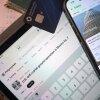
The new state law makes it a crime to host or advertise a prediction market, which it defines as a system that lets consumers place a wager on a future outcome, like sports, elections, live entertainment, someone’s word choice and world affairs.
The prohibition extends to services supporting prediction markets, like virtual private networks, that could allow consumers to disguise their location and get around the ban.
It would force prediction market sites like Kalshi and Polymarket to leave the state, or face possible felony charges. The law takes effect in August.

“We as a state should decide how best and what regulations we think should attach to gambling, to protect public safety, to protect our kids,” said Minnesota Rep. Emma Greenman, the Democrat who introduced the measure.
The law has a carve-out for event contracts that serve as an insurance policy in the event of “harm, or loss sustained” and for the purchase of securities and other commodities.
The Commodity Futures Trading Commission’s lawsuit seeks to block the law before it starts, arguing the prediction market industry should be exclusively regulated by federal officials.
“This Minnesota law turns lawful operators and participants in prediction markets into felons overnight,” said CFTC Chairman Michael Selig. “Minnesota farmers have relied on critical hedging products on weather and crop-related events for decades to mitigate their risks. Governor Walz chose to put special interests first and American farmers and innovators last.”
An updated version of the prediction market bill allows trading on weather, an exception that followed pushback from the agricultural industry, which has historically used futures trading on weather as a hedge against storms and other inclement weather that can affect a harvest. Walz is expected to sign it soon.
Besides Minnesota, bills cracking down on the prediction market industry have been introduced in seven other states, according to the National Conference of State Legislators. Two of those states, Hawaii and North Carolina, have pending bills seeking to ban the industry statewide.

Experts say the cloud of legal uncertainty hanging over prediction markets apps have not slowed their rapid growth.
“The states are using any tactic they can to go after the prediction market companies,” said Melinda Roth, a professor at Washington and Lee University’s School of Law, who studies the industry. “But they’ve embarked on a too big to fail strategy and have become quite mainstream,” she said. “It will be hard to put that genie back in the bottle.”
A legal fight over the Minnesota ban is expected. Questions over whether states or the federal government should oversee the prediction market industry have already triggered more than 20 lawsuits. One of those cases, in Nevada, led to Kalshi pausing its sports betting in the state after a judge found it “indistinguishable” from state-regulated sports gambling.
The Commodity Futures Trading Commission has filed federal lawsuits against five states, including Arizona, Wisconsin and New York, attempting to override state regulators’ attempts to rein in the betting sites.

The CFTC has argued it has exclusive jurisdiction over prediction markets, even though former CFTC members and legal experts say bets on football games, words President Trump might say during a press conference and whether Ricky Martin will make an appearance at the Super Bowl are matters far outside its traditional scope.
In a statement to NPR, Kalshi spokeswoman Elisabeth Diana said banning prediction markets is a “blatant violation” of the law.
“Minnesota banning prediction markets is like trying to ban the New York Stock Exchange,” said Diana, adding that “this actively harms users because it reduces competition and drives activity offshore.”
A Polymarket spokesman told NPR that Minnesota’s ban runs counter to the federal government’s “established framework” for regulating prediction markets.
Tribal-owned casinos operate in Minnesota, but online gambling and sports betting are not legal in the state.
Prediction markets like Kalshi and Polymarket have given access to sports betting to people in states where the activity is prohibited, since the Trump administration regulates the sites as a type of “event contract,” rather than gambling, which typically is overseen by state gaming authorities.
Nonetheless, sports gambling powers the sites. On Kalshi, for instance, more than 85% of trading activity is related to a sporting event, some of those trades being “parlays,” high-risk wagers that multiple things, points scored, fouls, passes, will all happen.

Bettors on the sites are making billions of dollars in trades every week, even as questions around insider trading and how the markets can create perverse incentives for people to manipulate real world outcomes continue to vex the companies.
Minnesota Public Radio News reporters Dana Ferguson and Peter Cox contributed reporting to this story.
