

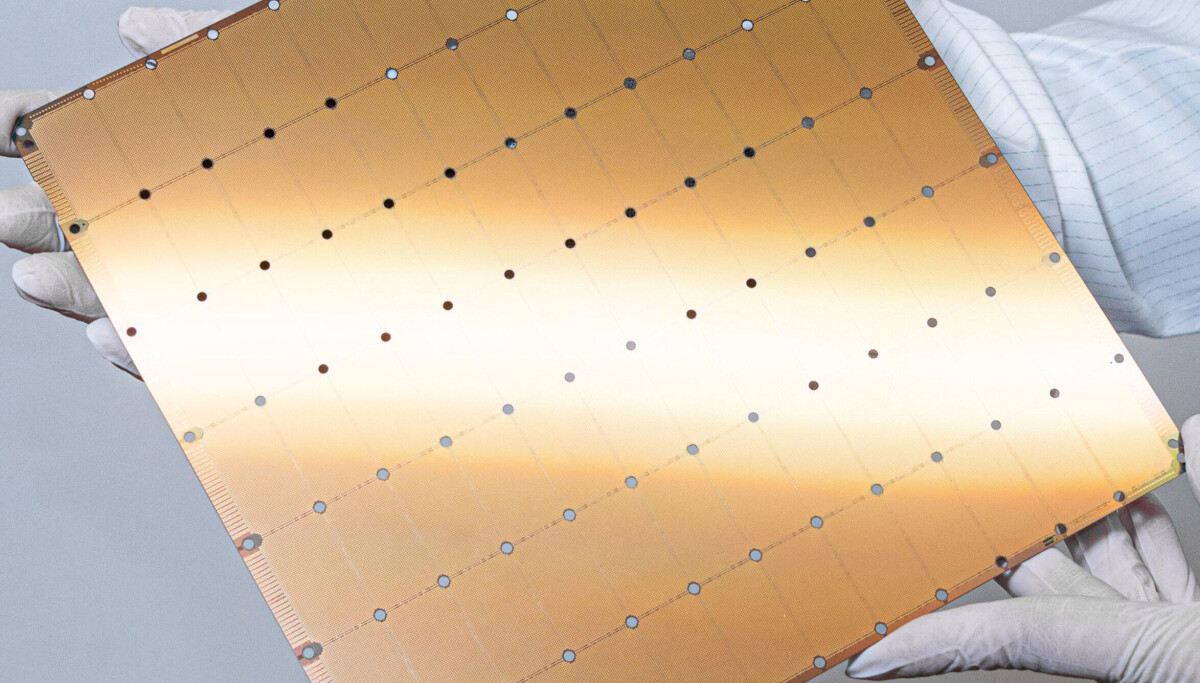
There
will probably never be a better time for any AI-related company to go public
than between right now and next summer. The GenAI frenzy is at a fever pitch, and
the big four hyperscalers and cloud builders alone – Amazon Web Services,
Google Cloud, Meta Platforms, and Microsoft Azure – have collectively projected
for capital expenses to be somewhere between $695 billion and $725 billion in
2026. There is probably at least that much expected to be spent between the big
AI model builders (who are starting to build their own datacenters), hyperscalers
in China, plus sovereign AI centers, HPC centers, academic centers, and
governments who are also wanting to get in on the GenAI action.
GenAI
is a tactical and strategic weapon, both economically and militarily, and it is
also a cultural force that has the potential to do great things as well as
great harm to the established orders in these spheres.
Set
against this backdrop, the hyperscalers and cloud builders are designing their
own CPUs and XPUs or partnering with companies other than Nvidia and AMD to try
to get better bang for the buck for AI inference workloads – or just to get any
kind of matrix math compute at all.
It
would have been hard for Cerebras Systems to pick a better day to go public and
set the tone for the initial public offerings of Anthropic, OpenAI, and SpaceX,
the latter of which has absorbed the xAI model building business that probably
won’t be building Grok models in the future but is selling capacity on the
Colossus-1 supercomputer in Memphis to rival Anthropic.
It
is a classic “the enemy of my enemy is my friend” scenario, with no love lost
between OpenAI and Musk, one of its founding investors who correctly observes
that OpenAI was founded as a non-profit but then changed its mind. In the long
run, SpaceX will probably build foundation models, or maybe Tesla will. Elon
Musk is probably not done moving his pieces around the board, and it would not
be surprising to see SpaceX and Tesla merged into one giant conglomerate doing self-driving
cars, autonomous robots, and space launches, all of which need physical AI
models more than they need GenAI models. If the Musk conglomerate needs a GenAI
model, it can just use Anthropic’s Claude and be done with it, trading compute capacity
for model access much as Microsoft did for many years with OpenAI.
The
appetite for shares in Cerebras Systems, whose bankers sure did take their time
getting co-founder and chief executive officer Andrew Feldman to ring the bell
at the NASDAQ market, was huge, with an oversubscription of 25X for the 215.23
million shares that floated at $185 a pop, raising $5.55 billion for Cerebras.
At the end of the day, the Cerebras shares were worth $311 per share, giving
the public float of shares a market capitalization of $39.8 billion. If all of
the shares and warrants in the company were taken into account, the market
capitalization is about $95 billion.
That’s
not too shabby for a company that had a $23 billion valuation after a $1
billion Series H fund raising round back in February.
With
the IPO, Feldman’s 4.5 percent stake in Cerebras is worth $3.2 billion, while
chief technology officer Sean Li has a 2.4 percent stake worth $1.7 billion.
We
are not going to recap all of the financials for Cerebras, which we
drilled down into back in April when the company refiled an S-1 in preparation
for going public, something it had planned to do last year but put the
kibosh on it because it was able to raise money through addition funding
rounds. All told, including $1 billion from the Series H round, $1.3 billion in
cash and marketable securities, and $1 billion in working capital from its
$20 billion, 750 megawatt deal to install CS waferscale systems at OpenAI between
now 2028 plus another 3 gigawatts of gear in 2029 and 2030. With the $5.55
billion infusion from the IPO, it has $8.9 billion in cash and equivalents.
That is a good bit of money with which to build those systems for OpenAI as
well as Mohamed bin Zayed University of Artificial Intelligence and G42, the
two other big customers from the Middle East. The deal with Amazon Web Services
has yet to be fully fleshed out, but we think it will happen and there is an
outside chance that CS systems become the low latency inference boxes at AWS to
complement its homegrown Trainium systems. It would not be surprising to see
Anthropic ink a deal with Cerebras, too – and soon before Anthropic goes public
so it can show it has the iron it needs to do low latency AI inference.
Here
is what is very important about that big pile of cash that Cerebras now has. It
is the successful innovator in waferscale chippery, and made something that several
companies had tried to do and failed at. But the silicon wafers are not getting
bigger at the same time that transistors are not getting dense enough fast enough,
and whatever density and performance that Taiwan Semiconductor Manufacturing Co,
Samsung, and Intel can bring to bear in their foundries, we are trapped on a
300 millimeter (12-inch) wafer and 450 millimeter (18-inch) wafers, an effort
that failed a decade ago, is not going to happen. And even if that did happen,
that would only get Cerebras another 50 percent more space to lay down compute
and SRAM.
We
think that with the WSE-4 waferscale chip, due perhaps later this year,
Cerebras is going to have to go 3D and innovate on the Z axis much as it has
done on the X and Y axes. When the low latency AI inference wars started in
earnest a little more than a year ago, Cerebras and Groq alike had to gang up
multiple machines together not for the compute, but because that was the only
way to get enough SRAM in a system to get the model weights in memory close to
the compute. At first, it was three CS-3 machines, then it was four, and then Cerebras
stopped talking about the number when it gave out test results. So did Groq.
What
is clear is that the compute to SRAM ratio on the WSE-3 waferscale processors
is wrong for low latency inference. There are two ways to fix this. Shrink the
process, cut back on the compute, and jack up the SRAM. It would be very
difficult, however, to get 3X to 4X more SRAM onto a 2D square cut out of a
12-inch wafer. You would then have to interconnect these wafers to scale out
the compute because there would be a lot less of it on each waferscale chip.
The
other option, which we have seen both AMD and Intel do with their CPUs and
GPUs, is to go vertical with the on-chip memory and stack it up. Stacked SRAM
on top of the base WSE-4 wafer could easily solve this problem and boost the
effective performance per WS engine such that an AI model may go back to
fitting on a single device again for reasonably sized and still useful models.
We think there is a high likelihood that the future WSE-4 will do at least
this.
We have higher hopes for innovation, of course. We
would like for the WS-4 to have optical links coming out of the wafer to shared
DRAM memory trays to significantly expand the MemoryX capacity of the CS-4
system, and make the memory have its own network (as is done with GPUs these
days with so-called scale up memory fabrics). Optical links using co-packaged
optics could also be used to implement SwarmX clustering, boosting bandwidth
between WSE devices significantly.
