

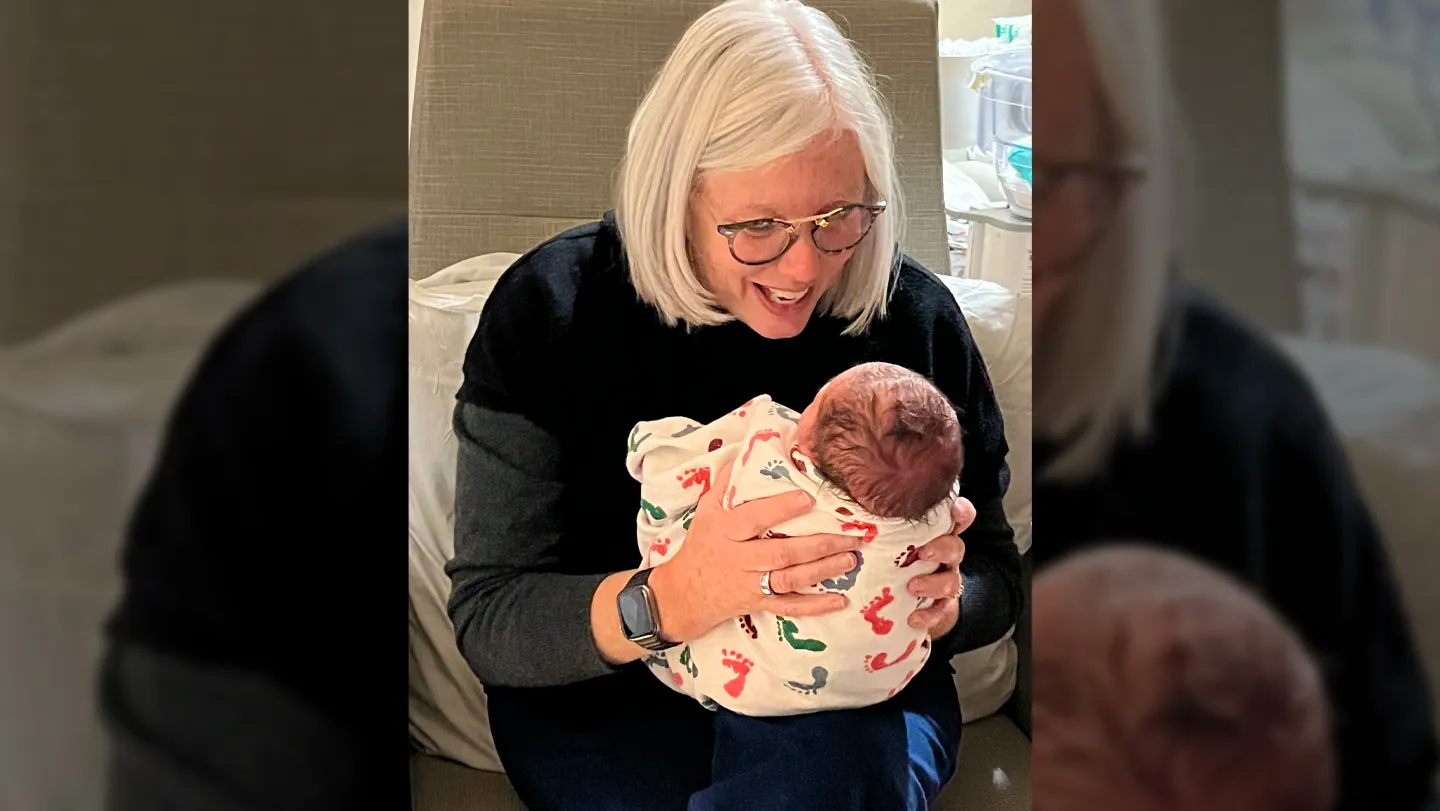
Molly O’Shea has been practicing pediatrics for 33 years. “I’ve seen it all,” she says. Her career spans the introduction of numerous vaccines, a decline in infectious diseases — and a troubling rise in vaccine hesitancy.
When, in January, the Trump administration slashed the number of recommended shots in the government’s childhood vaccination schedule, the rotavirus vaccine was among those demoted. O’Shea remembers when a vaccine wasn’t available. During her first month of graduate medical training in 1990, an infant died of diarrheal illness caused by rotavirus. To watch the child “waste away and die despite all our efforts,” she says, “it was so devastating.”
But on March 16, a federal judge blocked the administration’s changes. And he didn’t mince words. “For our public health, Congress and the Executive have built — over decades — an apparatus that marries the rigors of science with the execution and force of the United States government,” U.S. District Judge Brian Murphy wrote in his opinion in American Academy of Pediatrics v. Robert F. Kennedy.
Historically, decisions regarding vaccination policy have been made with “a method scientific in nature and codified into law through procedural requirements,” Murphy wrote. “Unfortunately, the Government has disregarded those methods and thereby undermined the integrity of its actions.”
Along with restoring the number of vaccines that had previously been recommended, the judge also found that U.S. Health and Human Services Secretary Kennedy’s handpicked members on the Advisory Committee for Immunization Practices, or ACIP, were unlawfully appointed. That makes the group’s past decisions invalid. The Trump administration is expected to appeal.
In the meantime, “this ruling is really important because it means that all kids can be protected from these [vaccine-preventable] illnesses at the times when they need to be most protected,” says O’Shea, who has advocated for children’s health with the AAP. “And it’s a real win for science too because it says you really do have to rely on science to make these decisions, and not just opinion.”
O’Shea practices in Bloomfield Hills, Mich. For parents who are uncertain about vaccines, “I think validating their point of view, their information, is really important,” she says, along with sharing the science behind immunization. So too is recognizing the common ground she shares with families: keeping children healthy.
In the past, the main query O’Shea got from parents was focused on whether vaccines were tied to autism, which was based on a study that had falsified data and was later retracted. But since Trump returned to office in 2025 and elevated Kennedy to HHS Secretary, she has noticed the range of concerns has expanded. The administration “is stoking a different type of uncertainty.”
There’s “the toxin mindset,” she says, “which I think comes from a real place” of concern about what people see as exposure to chemicals. Some families worry that there will be future evidence of potential harm from vaccine ingredients, analogous to what’s being discovered now about per- and polyfluoroalkyl substances or microplastics, she says. O’Shea responds by noting that the components of vaccines have been consistent over time and researchers haven’t found worrying connections to health conditions. But “the risk of bad outcomes from the disease itself is real today.”
Also new are those who tell O’Shea “you can’t believe in the actual science,” that the science behind vaccination “has been quashed.”
It will take time to get a full picture of the affect the current Trump administration is having on vaccine distrust. So far, majorities in two recent polls still voice support for vaccines. In November, the nonpartisan Pew Research Center reported that 63 percent of Americans polled are highly confident in the effectiveness of childhood vaccines. KFF, a nonprofit health policy organization, released poll results in February, conducted after the government’s announcement of a diminished childhood vaccination schedule. Of the half of U.S. adults who were aware of the news, 54 percent said the changes would negatively impact children’s health.
Even so, there are warning signs of decreasing vaccination rates. Coverage among kindergartners fell for all reported shots in the 2024–2025 school year compared with the year before. Hepatitis B vaccination rates for newborns dropped from 83.5 percent in February 2023 to 73 percent by August 2025, researchers reported in the Journal of the American Medical Association in February. This trend predates the ACIP decision in December to no longer recommend a universal birth dose.
Then there are the ongoing measles outbreaks in the United States. The vaccination coverage threshold to help stop the spread of measles is high, around 95 percent. An outbreak in South Carolina — with close to 1,000 cases as of early March — is centered in Spartanburg County, where the coverage for the measles mumps and rubella, or MMR, shot is just shy of 89 percent in schools. The vast majority of reported cases are among people who are unvaccinated or whose MMR shot status is unknown.
Anecdotally, some of O’Shea’s families who were previously vaccinating have become more wary. Others have left her practice since the return of the Trump administration, deciding they no longer want to vaccinate.
“What’s unfortunate is that parents who are getting less confident about or not wanting to vaccinate, they don’t really see as much value in even just the yearly wellness visit for their kids,” O’Shea says. But that’s “where continued relationship-building happens,” not just between the pediatrician and the parent but also the pediatrician and the child. The yearly contact matters, she says, especially as kids get older and may have things they want to talk with her about on their own.
To help build back trust, “we need [political] leadership that actually believes in vaccines,” O’Shea says. It’s also a part of routine family appointments with pediatricians. She encourages her families who have questions and concerns to tell her what they are thinking so they can talk it through. “Often they’ve heard all kinds of things,” some accurate, much not. “It’s important to make sure everybody is heard” and that families have confidence in their decision to vaccinate, she says.
O’Shea wants parents to know that the vaccine schedule is designed with a child’s immune system in mind. “The vaccines are timed and the dose is set up to work beautifully in tandem” with the growing immune system, she says. And the timing is “at the sweet spot to protect against illness.”
“By following the schedule, your child is going to really reap the reward of that immune system exposure,” O’Shea says. “Because the safest way — the safest way — [for the body] to learn about any illness is through vaccination.”
