
LIVE NEWS
  • OpenAI acquires Tomoro as founding piece of $14 billion Deployment Company
  • Justice Dept. charges shipping company in deadly Key Bridge collapse – The Washington Post
  • I set up a $190 mesh Wi-Fi system at home, and it handled a dozen 4K video streams with ease
  • Study looks at reintroduction of storks in Britain
  • New West Virginia law requiring photo IDs at polling places greets voters in primary election
  • How Senior Living Communities Use Data to Improve Care and Operations
  • Uranus and Neptune could be full of rocks, new study suggests
  • Death of man struck by Frontier Airlines plane ruled suicide by medical examiner | Denver
Prime Reports
  • Home
  • Popular Now
  • Crypto
  • Cybersecurity
  • Economy
  • Geopolitics
  • Global Markets
  • Politics
  • See More
    • Artificial Intelligence
    • Climate Risks
    • Defense
    • Healthcare Innovation
    • Science
    • Technology
    • World
Prime Reports
  • Home
  • Popular Now
  • Crypto
  • Cybersecurity
  • Economy
  • Geopolitics
  • Global Markets
  • Politics
  • Artificial Intelligence
  • Climate Risks
  • Defense
  • Healthcare Innovation
  • Science
  • Technology
  • World
Home»Science»NASA’s Artemis 2 astronauts saw flashes on the far side of the moon that cameras struggle to capture. Here’s why scientists are excited
Science

NASA’s Artemis 2 astronauts saw flashes on the far side of the moon that cameras struggle to capture. Here’s why scientists are excited

primereportsBy primereportsMay 8, 2026No Comments4 Mins Read
Share Facebook Twitter Pinterest LinkedIn Tumblr Reddit Telegram Email
NASA’s Artemis 2 astronauts saw flashes on the far side of the moon that cameras struggle to capture. Here’s why scientists are excited
Share
Facebook Twitter LinkedIn Pinterest Email


The Artemis 2 astronauts remained vigilant while zipping around the far side of the moon last month, on the ready to record meteoroid impact flashes on the lunar landscape.

Their diligence was rewarded. The four crewmembers reported seeing several impact flashes — flickers of light created when a meteoroid hits the lunar surface and vaporizes.

“These observations were made with the unaided eye. It’s extremely difficult to capture impact flashes with a camera, which is one of the benefits of sending trained crew to observe the moon,” Molly Wasser, media lead for the Planetary Science Division at NASA Headquarters, told Space.com. “Early data indicates that the impact flashes were observed on the far side of the moon.”


You may like

Citizen scientists help out

Artemis 2, the first crewed moon flight since Apollo 17 in 1972, launched from Florida’s Space Coast on April 1 and flew around the far side of the moon on April 6.

As the astronauts scrutinized the moon that day, so did citizen scientists here on Earth. They were also looking for impact hits, although they would likely not have spotted the same ones as the crew.

Those observations were gathered as part of the newly launched Impact Flash citizen science project under the auspices of the Geophysical Exploration of the Dynamics and Evolution of the Solar System (GEODES), a unit within the NASA Solar System Exploration Research Virtual Institute.

The Impact Flash effort is geared to gather more data on the location and brightness of flashes throughout recent and upcoming Artemis moon missions.

NASA’s Artemis 2 astronauts saw flashes on the far side of the moon that cameras struggle to capture. Here’s why scientists are excited

“These flashes are vital to scientists who study the moon,” notes the Impact Flash website. “By tracking when and where they happen, scientists can learn how often impacts of different sizes occur, what kinds of craters they create, and how the shock waves travel through the moon’s interior.”

When combined with data from NASA’s moon-circuiting Lunar Reconnaissance Orbiter (LRO), future lunar surface instruments, and crew observations, the citizen science observations “can provide valuable constraints on the origin and characteristics of impactors, as well as craters that form from the impacts,” Wasser said.
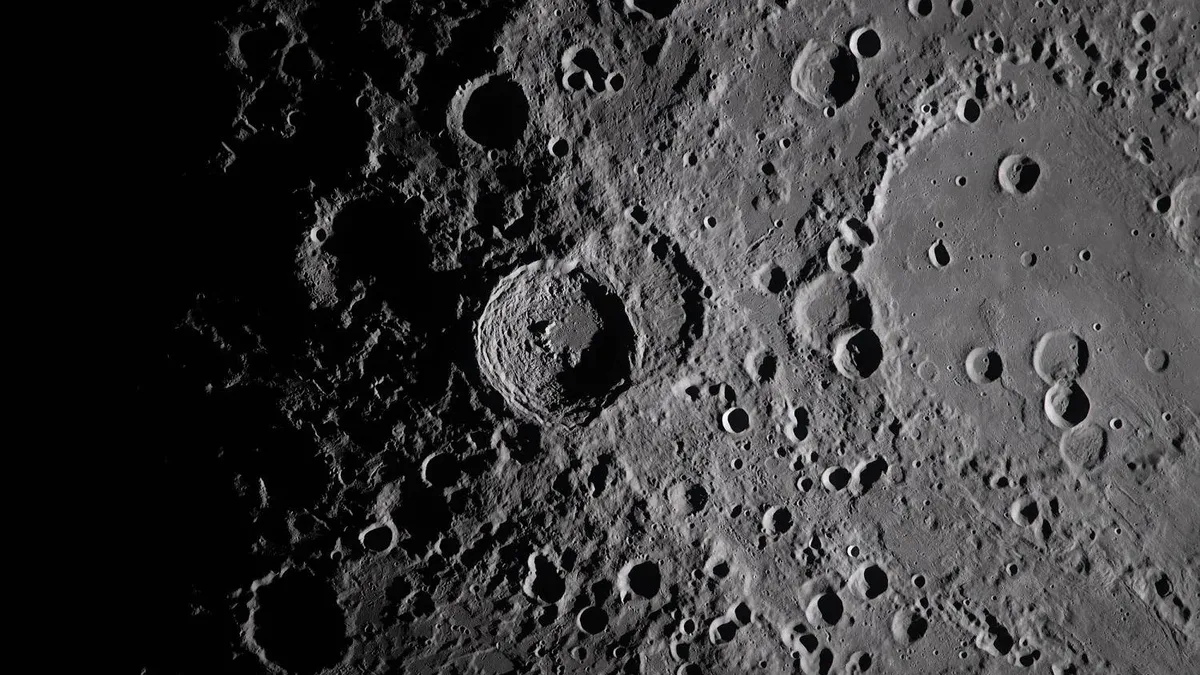
closeup view of the moon's cratered surface

Up-close and far-side viewing of the moon made possible by the Artemis 2 mission. (Image credit: NASA)

Observation window

The Artemis 2 astronauts’ impact-flash observation window extended out onto the lunar near side in darkness, Benjamin Fernando, of the Department of Earth and Planetary Sciences at Johns Hopkins University in Baltimore, told Space.com.


What to read next

In a paper posted earlier this year on the preprint server EarthArXiv, Fernando and colleagues reported that coordinated impact flash observations seen both from Earth and from lunar flyby/orbit will allow more detailed information to be gathered about the timing, location and dynamics of flashes than is possible from either method alone.

Joint observation campaigns enable researchers to better constrain the impact flux on the moon and also the associated impact hazard on the lunar surface, Fernando and his colleagues concluded.

Moon base implications

Updated knowledge about the meteoroid impact flux also plays into planning for Artemis Base Camp, the outpost NASA plans to build near the moon’s south pole.

“To design for longevity, one must account for the myriad environmental hazards that a long-duration outpost will face — among them radiation, extreme thermal cycling, regolith dynamics, seismic shaking, dust, and, of particular importance to this work, impacts,” notes a 2025 study led by Daniel Yahalomi, now a Torres Postdoctoral Fellow at MIT.

The lunar south pole offers a natural reduction in impact risk relative to equatorial sites, according to the study, “supporting its selection for sustained human presence.”

Furthermore, currently available shielding technology “is sufficient to suppress micrometeoroid hazards by nearly five orders of magnitude, reducing the effective risk to a manageable level for current habitat designs,” Yahalomi and his research colleagues concluded.
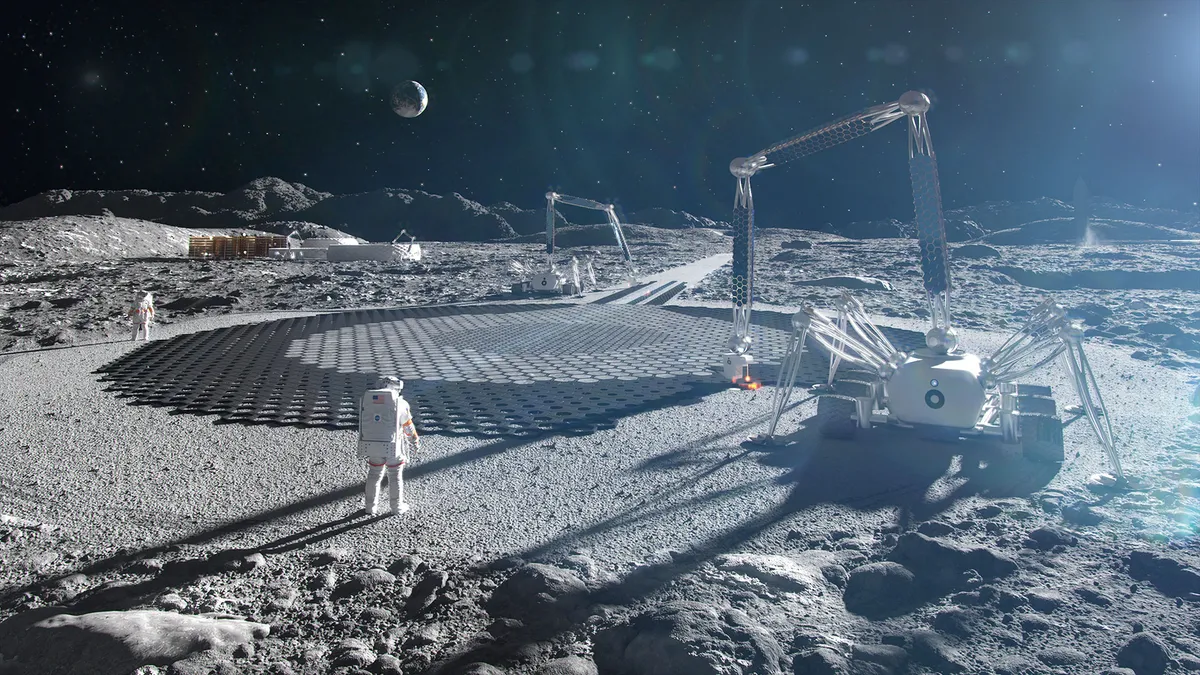
an artist's rendering of a NASA Artemis moon base with development underway.

An artist’s rendering of a NASA Artemis moon base. (Image credit: NASA)

Big science haul

Hunting for impact flashes was one of many science tasks for the astronauts during their historic April 6 flyby. The Artemis 2 Lunar Science Team remains busy analyzing the mission’s science haul — gathered with the aid of 31 cameras aboard the Orion capsule “Integrity” — and archiving it all on NASA’s Planetary Data System.

“Within six months, all imagery of the Earth and moon taken by crew and vehicle cameras, audio recordings of the crew’s science observations, and accompanying transcripts will be publicly available for the broader science community to analyze,” Wasserman said.

Share. Facebook Twitter Pinterest LinkedIn Tumblr Email
Previous ArticleSoftBank cuts OpenAI-backed margin loan target by 40% to $6bn
Next Article As the US Army adds drones to formations, here’s how one base trains its operators
primereports
  • Website

Related Posts

Science

Uranus and Neptune could be full of rocks, new study suggests

May 12, 2026
Science

Robert Smith obituary | Pharmacy and pharmacology

May 12, 2026
Science

Award for scientist who brought space to millions

May 12, 2026
Add A Comment
Leave A Reply Cancel Reply

Top Posts

Global Resources Outlook 2024 | UNEP

December 6, 20258 Views

The D Brief: DHS shutdown likely; US troops leave al-Tanf; CNO’s plea to industry; Crowded robot-boat market; And a bit more.

February 14, 20265 Views

German Chancellor Merz faces difficult mission to Israel – DW – 12/06/2025

December 6, 20254 Views
Stay In Touch
  • Facebook
  • YouTube
  • TikTok
  • WhatsApp
  • Twitter
  • Instagram
Latest Reviews

Subscribe to Updates

Get the latest tech news from FooBar about tech, design and biz.

PrimeReports.org
Independent global news, analysis & insights.

PrimeReports.org brings you in-depth coverage of geopolitics, markets, technology and risk – with context that helps you understand what really matters.

Editorially independent · Opinions are those of the authors and not investment advice.
Facebook X (Twitter) LinkedIn YouTube
Key Sections
  • World
  • Geopolitics
  • Popular Now
  • Artificial Intelligence
  • Cybersecurity
  • Crypto
All Categories
  • Artificial Intelligence
  • Climate Risks
  • Crypto
  • Cybersecurity
  • Defense
  • Economy
  • Geopolitics
  • Global Markets
  • Healthcare Innovation
  • Politics
  • Popular Now
  • Science
  • Technology
  • World
  • About Us
  • Contact Us
  • Privacy Policy
  • Terms & Conditions
  • Disclaimer
  • Cookie Policy
  • DMCA / Copyright Notice
  • Editorial Policy

Sign up for Prime Reports Briefing – essential stories and analysis in your inbox.

By subscribing you agree to our Privacy Policy. You can opt out anytime.
Latest Stories
  • OpenAI acquires Tomoro as founding piece of $14 billion Deployment Company
  • Justice Dept. charges shipping company in deadly Key Bridge collapse – The Washington Post
  • I set up a $190 mesh Wi-Fi system at home, and it handled a dozen 4K video streams with ease
© 2026 PrimeReports.org. All rights reserved.
Privacy Terms Contact

Type above and press Enter to search. Press Esc to cancel.