
LIVE NEWS
  • Trump and Xi: Beneath the Pomp and Niceties, a Geopolitical Rivalry
  • Iran confirms no nuclear talks with US amid diplomatic stalemate
  • Windows BitLocker zero-day gives access to protected drives, PoC released
  • Alexandr Wang Wants AI’s Biggest Feuds to Chill Out
  • West Pointers can be trained to better evaluate, appreciate AI, study finds
  • Companies start getting tariff refunds after Supreme Court decision
  • AI tool has ‘saved a lot of aircraft’ in Epic Fury, AFSOC chief says
  • To get string theory, you need only four physics assumptions
Prime Reports
  • Home
  • Popular Now
  • Crypto
  • Cybersecurity
  • Economy
  • Geopolitics
  • Global Markets
  • Politics
  • See More
    • Artificial Intelligence
    • Climate Risks
    • Defense
    • Healthcare Innovation
    • Science
    • Technology
    • World
Prime Reports
  • Home
  • Popular Now
  • Crypto
  • Cybersecurity
  • Economy
  • Geopolitics
  • Global Markets
  • Politics
  • Artificial Intelligence
  • Climate Risks
  • Defense
  • Healthcare Innovation
  • Science
  • Technology
  • World
Home»Geopolitics»West Pointers can be trained to better evaluate, appreciate AI, study finds
Geopolitics

West Pointers can be trained to better evaluate, appreciate AI, study finds

primereportsBy primereportsMay 13, 2026No Comments3 Mins Read
Share Facebook Twitter Pinterest LinkedIn Tumblr Reddit Telegram Email
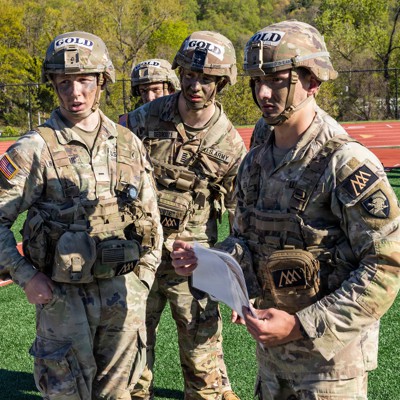
West Pointers can be trained to better evaluate, appreciate AI, study finds
Share
Facebook Twitter LinkedIn Pinterest Email


Although Americans generally trust AI less than, say, Chinese people, they are often willing to accept a chatbot’s wrong answers. As Pentagon leaders push broader use of such tools, a new paper offers some reassuring news: West Point cadets can be trained to be more appropriately skeptical of AI’s output—while remaining broadly optimistic about its potential.  

Researchers from Georgetown University, the University of Pennsylvania, and the U.S. Military Academy published a paper last week comparing 236 West Point cadets to a demographically similar sample of 702 members of the public. The paper explores automation bias—humans’ tendency to over-rely on automation—and algorithm aversion, an inclination to “prematurely distrust automated outputs in ways that increase the risk of accidents or mistakes.”

One hypothesis they sought to test was that the pressures of battle would make military members would be more inclined to trust faulty outputs from a decision-support system, or DSS.

“Major powers such as the United States, China, and Russia are experimenting with integrating AI DSS into their command structures, thereby decreasing their sensor-to-shooter timelines,” they write. This might lead officers “to delegate decision-making authority to AI DSS.”

The military has long grappled with AI-enabled decision assistants. But the recent arrival of large language models like ChatGPT, Claude, and Gemini led West Point to declare a special academic focus for the 2024-25 school year:  “The Human and the Machine: Leadership on the Emerging Battlefield.”

This and other efforts seemed to work. In the study, West Pointers demonstrated “AI knowledge scores” nearly twice as high as the general public, and were less than half as likely to commit an automation bias error—that is, to trust a mistaken chatbot.

Cadets were also more likely to assess AI output by looking at the tool’s own confidence indicators, something few regular users do.

“These findings align with the way the USMA seeks to train cadets so they can achieve justified confidence, that is, to be properly calibrated so their expectations of an AI system’s accuracy match the reality of the accuracy of the system,” the researchers wrote.

In the study, about twice as many cadets expressed worry about the dangerous consequences of AI than did members of the public, but they were much less likely to describe AI as “sinister.” 

Cadets were also more enthusiastic about the potential of the technology: 87.7 percent saw strong beneficial applications for AI compared to 72.5 percent of the public, while 79.5 percent described it as “exciting,” versus 61.6 percent of the public.

UPenn’s Michael C. Horowitz, a former deputy assistant defense secretary for force development and emerging capabilities, told Defense One that the study “shows what some of the opportunities might look like for further training within the U.S. military at least. This suggests that training to reduce the risk of automation bias for military personnel using artificial intelligence could be effective.”

Horowitz noted that cadets’ training is “probably not representative of the average military right now, but it shows the path forward, at least for the U.S. military.”

Such training might also benefit the U.S. public, which might soothe the worries of technologists and leaders who say Americans’ declining trust in AI, compared to populations in China, is a national security concern.


Share. Facebook Twitter Pinterest LinkedIn Tumblr Email
Previous ArticleCompanies start getting tariff refunds after Supreme Court decision
Next Article Alexandr Wang Wants AI’s Biggest Feuds to Chill Out
primereports
  • Website

Related Posts

Geopolitics

No solidarity: Southeast Asian countries split as each seeks Iranian oil

May 13, 2026
Geopolitics

Trump-Xi Beijing Meeting Sees China Hawks Take a Back Seat

May 12, 2026
Geopolitics

Nebraskans head to the polls as Democrats vote in primaries ahead of House and Senate races | US midterm elections 2026

May 12, 2026
Add A Comment
Leave A Reply Cancel Reply

Top Posts

Global Resources Outlook 2024 | UNEP

December 6, 20258 Views

The D Brief: DHS shutdown likely; US troops leave al-Tanf; CNO’s plea to industry; Crowded robot-boat market; And a bit more.

February 14, 20265 Views

German Chancellor Merz faces difficult mission to Israel – DW – 12/06/2025

December 6, 20254 Views
Stay In Touch
  • Facebook
  • YouTube
  • TikTok
  • WhatsApp
  • Twitter
  • Instagram
Latest Reviews

Subscribe to Updates

Get the latest tech news from FooBar about tech, design and biz.

PrimeReports.org
Independent global news, analysis & insights.

PrimeReports.org brings you in-depth coverage of geopolitics, markets, technology and risk – with context that helps you understand what really matters.

Editorially independent · Opinions are those of the authors and not investment advice.
Facebook X (Twitter) LinkedIn YouTube
Key Sections
  • World
  • Geopolitics
  • Popular Now
  • Artificial Intelligence
  • Cybersecurity
  • Crypto
All Categories
  • Artificial Intelligence
  • Climate Risks
  • Crypto
  • Cybersecurity
  • Defense
  • Economy
  • Geopolitics
  • Global Markets
  • Healthcare Innovation
  • Politics
  • Popular Now
  • Science
  • Technology
  • World
  • About Us
  • Contact Us
  • Privacy Policy
  • Terms & Conditions
  • Disclaimer
  • Cookie Policy
  • DMCA / Copyright Notice
  • Editorial Policy

Sign up for Prime Reports Briefing – essential stories and analysis in your inbox.

By subscribing you agree to our Privacy Policy. You can opt out anytime.
Latest Stories
  • Trump and Xi: Beneath the Pomp and Niceties, a Geopolitical Rivalry
  • Iran confirms no nuclear talks with US amid diplomatic stalemate
  • Windows BitLocker zero-day gives access to protected drives, PoC released
© 2026 PrimeReports.org. All rights reserved.
Privacy Terms Contact

Type above and press Enter to search. Press Esc to cancel.